

Health officials raise concerns about lowering number of childhood vaccines
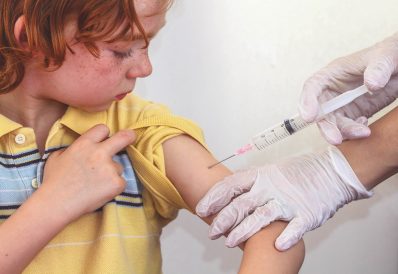
Public health officials and pediatricians across Pennsylvania have raised concerns after President Donald Trump signed an executive order this week lowering the number of recommended vaccines for children.
Monday’s order decreases the number of diseases covered by federal vaccine recommendations from 18 to 11.
It also calls for the MMR vaccine, which protects against measles, mumps, and rubella, to be split into three separate shots and for vaccines to be spread out over more doctor visits.
Trump and Health Secretary Robert F. Kennedy have long raised questions about a possible link between vaccines and autism, even though numerous studies have found no link, and they said children are getting too many vaccines.
Doctors say there is no credible evidence that vaccines cause autism, and warn that delaying vaccines could leave children vulnerable to preventable diseases.
Dr. Joseph Aracri, System Chair of the Pediatric Institute at Allegheny Health Network, said “changes that make vaccination more complicated increase vaccine hesitancy, create confusion for families, and ultimately result in more preventable illnesses, hospitalizations, and community outbreaks.”
He is concerned that reducing the number of recommended vaccines or moving away from the combined MMR vaccine – which has been studied extensively for decades and consistently been shown to be safe and highly effective at preventing measles, mumps, or rubella – could lead to lower vaccination rates and leave more children vulnerable to serious diseases.
The Pennsylvania Department of Health said doctors in the state will continue to rely on medical evidence when making vaccine recommendations.
“In Pennsylvania, public health decisions are guided by rigorous medical science, not shifting national agendas,” said Pennsylvania Secretary of Health Dr. Debra Bogen. “Vaccines are the best tools we have to protect our communities from preventable diseases, and they have demonstrated this over and over again for generations,” Bogen said in a statement.
Bogen continued, “As a pediatrician, I know that splitting up combination immunizations, like the MMR vaccine, creates unnecessary hurdles for parents, needlessly extends the window of risk for our youngest residents, and doesn’t follow the results of the many studies that went into developing the previous vaccine schedules. Here in Pennsylvania, we will continue to follow the facts and evidence-based medicine to keep our children and communities safe.”
Dr. Pamela Schoemer, pediatrician and medical director of quality and safety at UPMC Children’s Community Pediatrics, said the organization will “continue to follow and recommend the American Academy of Pediatrics’ schedule, which protects children against 18 diseases, based on decades of strong evidence.”
“Vaccines reduce the risk of severe illnesses and complications and limit disease outbreaks in our communities,” said Schoemer.
The executive order was signed amid an increase in measles cases in the United States, which have reached a 35-year high, with nearly 2,500 cases reported so far in 2026 – including 232 confirmed cases in Pennsylvania – according to the Centers for Disease Control and Prevention.
“During a measles outbreak, any delay in vaccination can leave children unprotected against one of the most contagious viruses known. This is particularly troubling at a time when measles cases in the United States have reached their highest levels in roughly 35 years,” said Aracri.
The order does not directly change Pennsylvania’s school vaccination requirements, which are established by the state.
However, it directs the Justice Department to work with states on potentially reducing immunization requirements for school attendance.
Last fall, Gov. Josh Shapiro issued an executive order reiterating state policies should be “consistent with evidence-based recommendations endorsed by the nation’s leading medical associations, including, but not limited to, American Academy of Pediatrics, American Academy of Family Physicians, and American College of Obstetricians and Gynecologists.”
Pennsylvania also joined the Northeast Public Health Collaborative, which also plays a role in vaccine education and recommendations.
Dr. Andrew Racine, president of the American Academy of Pediatrics, called the order “not only disheartening but dangerous” in a statement. “Delaying or skipping shots is risky, especially as measles continues to spread and children go back to school.”
He continued, “The only thing I can see is going to happen as a result of the announcement (Monday) is the injection of greater amounts of uncertainty and fear and confusion where there doesn’t need to be any.”
The American College of Physicians warned the president’s changes could raise costs for families, including added copays, and force parents to schedule multiple appointments for a split MMR series.
Dr. Jan Carney, the group’s president, said the order creates barriers to vaccine access.
Aracri said the health system, which is closely aligned with the recommendations of the AAP, “wants vaccine recommendations to be guided by the strongest available scientific evidence and decades of clinical experience.”
“When changes are proposed that differ from longstanding evidence-based recommendations, physicians worry that families will receive mixed messages about vaccine safety and effectiveness. That can erode public confidence and contribute to lower vaccination rates,” said Aracri. “In the end, our goal as pediatricians is simple: protect children as quickly and effectively as possible using approaches supported by the best available scientific evidence.”