

At WCHS Arcs of Freedom symposium, historians explore justice, freedom
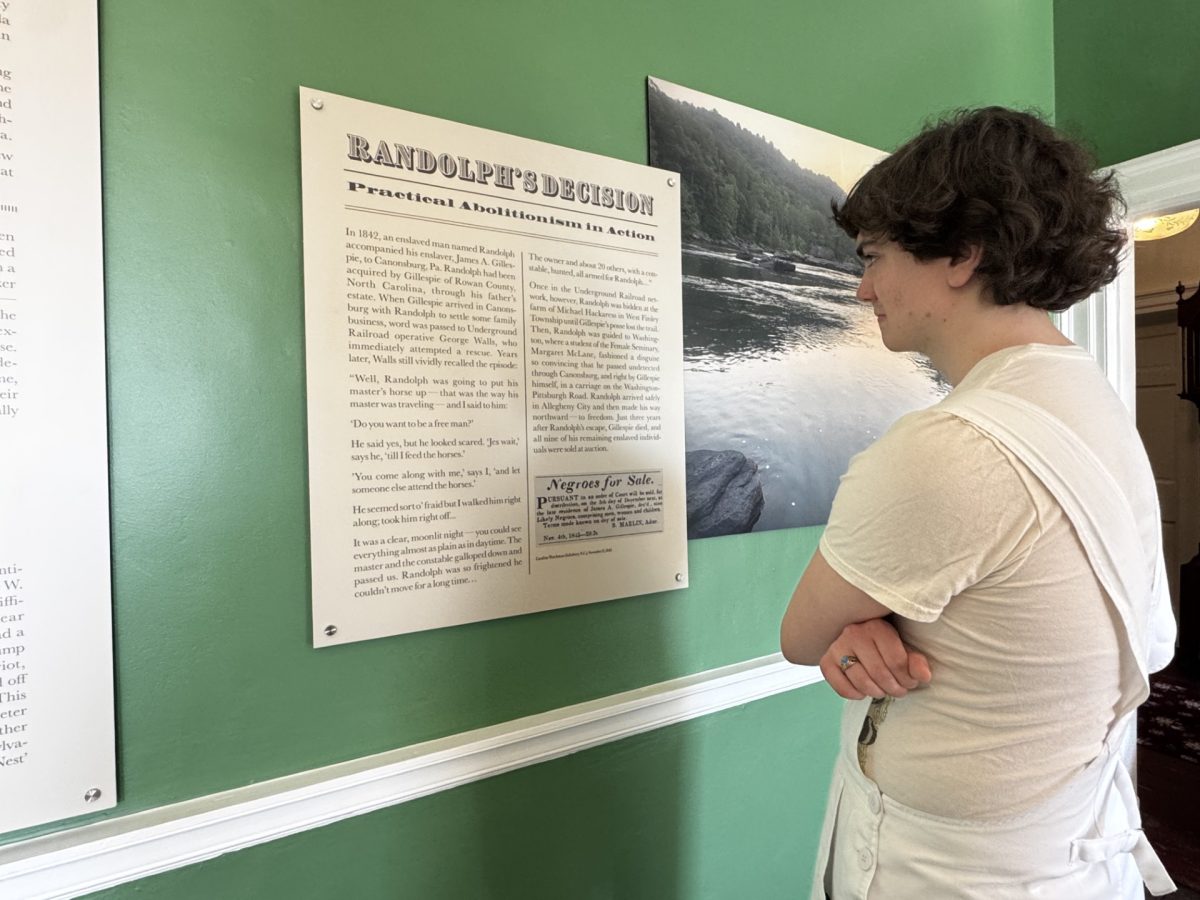
When the Washington County Historical Society opened its Arcs of Freedom exhibit in 2025 in the city of Washington’s LeMoyne House — a National Historic Landmark that served as a key stop on Underground Railroad — one of its aims was to tell the story of the Abolitionist Movement and the Underground Railroad by amplifying the voices of those who participated, especially the freedom seekers whose stories have gone untold.
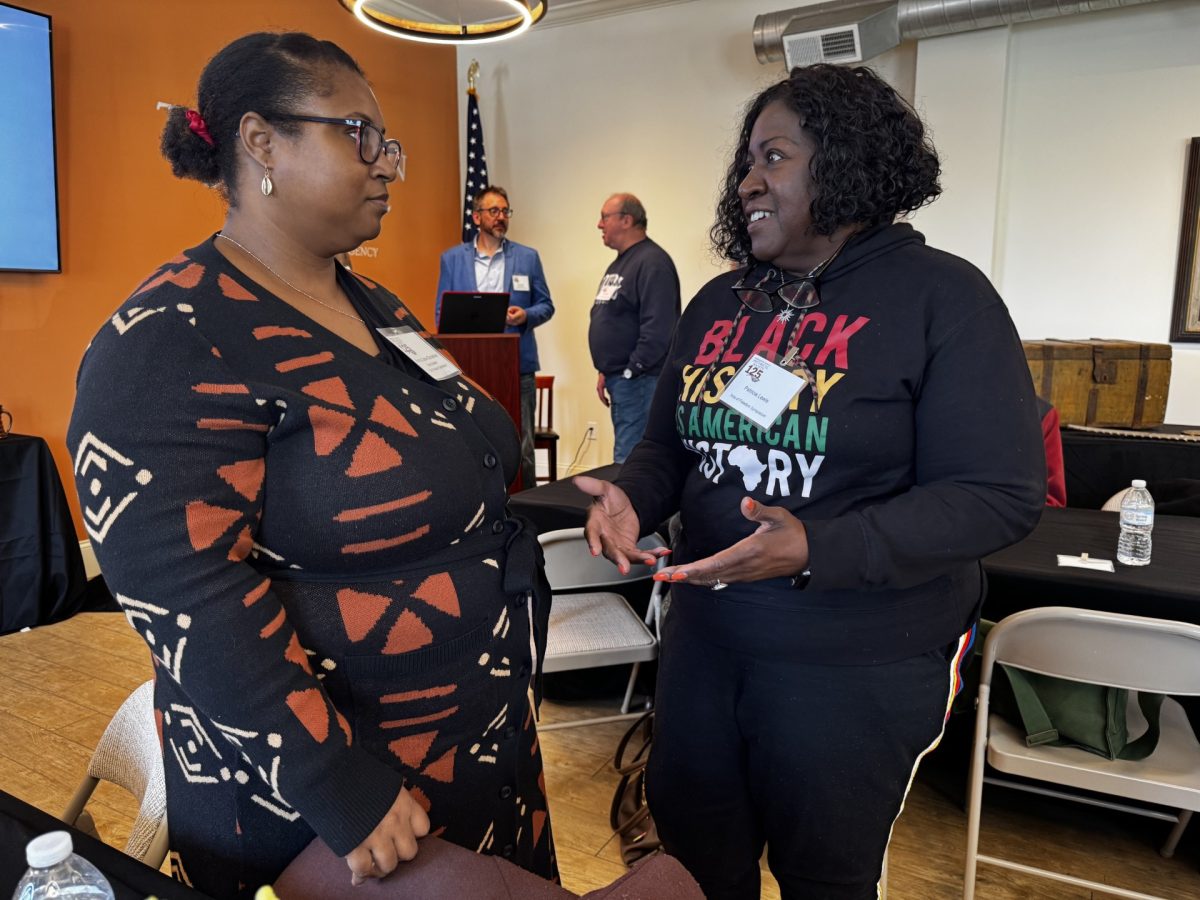
To that end, WCHS hosted its second annual Arcs of Freedom Symposium on Saturday, featuring two leading historians and scholars who shared stories and insights about Black men and women who shaped history by fighting for autonomy, justice and freedom in western Pennsylvania and beyond.
Held at WCHS’s Research and Education Center located across the street from the LeMoyne House, the symposium was co-sponsored by the LeMoyne Community Center and the NAACP of Washington.
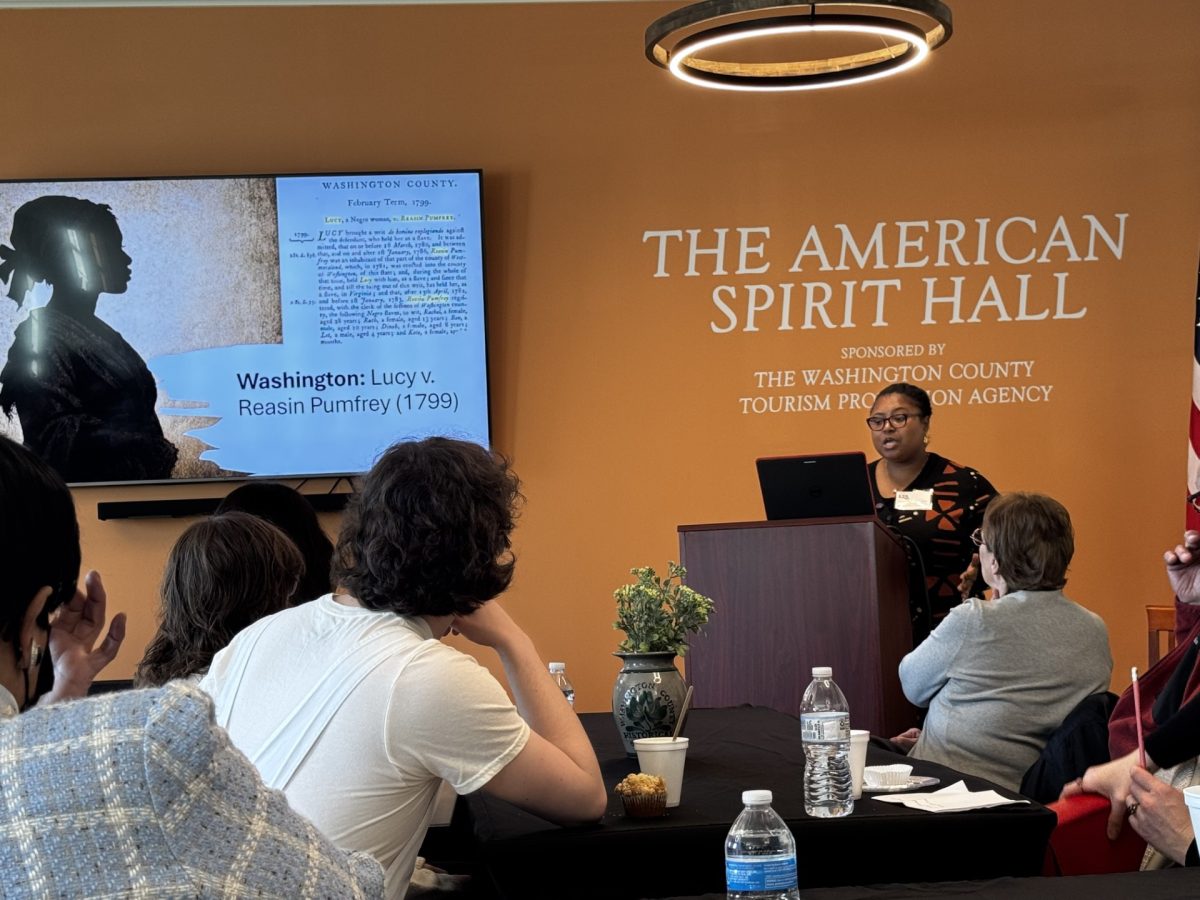
Alonna Carter-Donaldson, associate curator of the Museum of African American History at the Heinz History Center — whose fourth-great-grandmother, the daughter of a free Black woman and a Virginia congressman, sued the courts to secure the freedom of her children from apprenticeship — kicked off the symposium with a talk entitled “Taking My Freedom: Black Women, the Law, and Exercising Autonomy in Early Western Pennsylvania.”
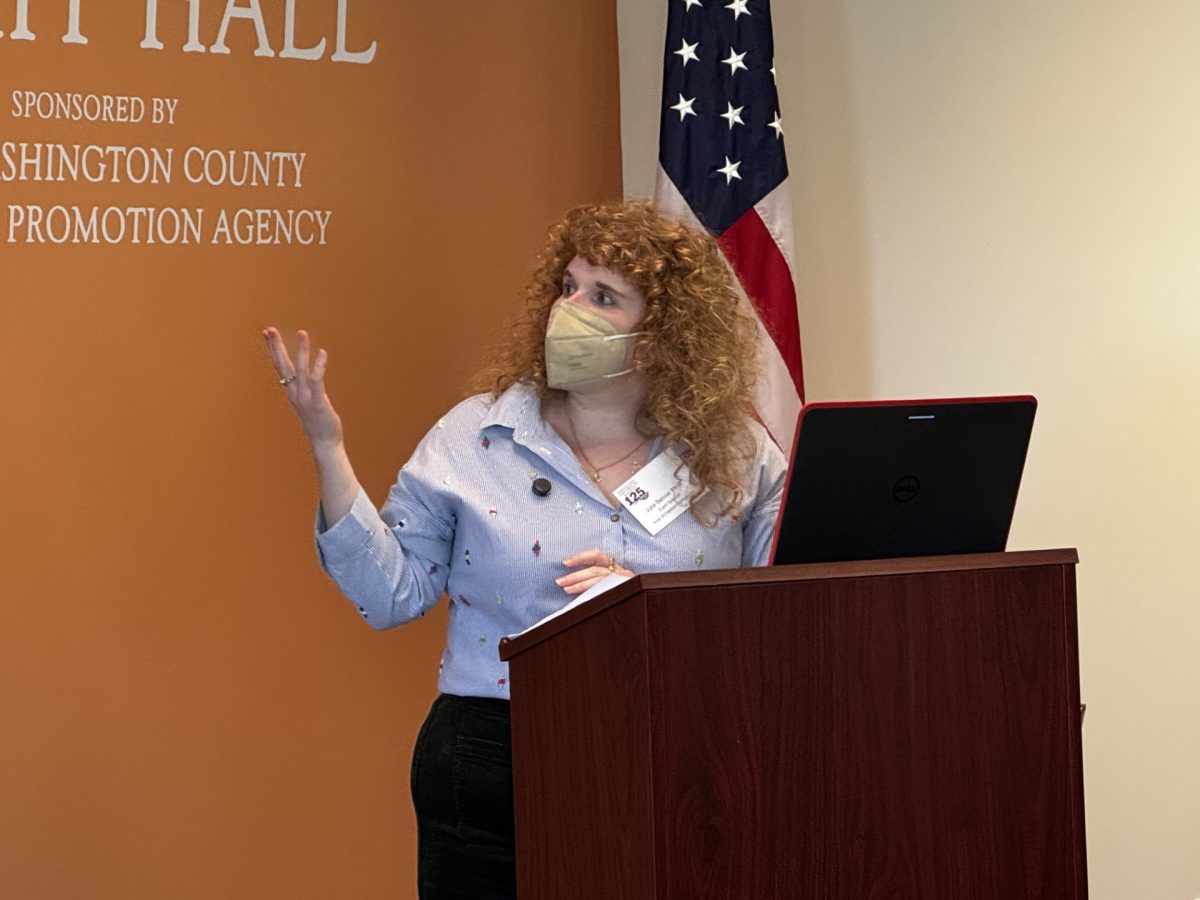
Dr. Julia Bernier, author and associate professor of History at Washington & Jefferson College, spoke about abolitionists’ split over self-purchase — a difficult and often lengthy process that enabled enslaved people to buy their freedom from their enslavers — in a lecture entitled “Ransomed! American Abolition and Buying Freedom.”
Carter-Donaldson’s work has centered on issues related to African American women and girls in the Pittsburgh region since the 1870s, and she shared with attendees the stories of enslaved women in western Pennsylvania who gained their freedom through legal means.
One case: Lucy, an enslaved woman who successfully sued her slaveholder, Washington County landowner Reasin Pumfrey, for her freedom in 1799, after the court ruled he failed to adhere to the state’s abolition laws.
Pumfrey brought Lucy and five other enslaved women from Maryland to Washington County, and during the trial, Pumfrey claimed that he had registered Lucy under the name “Ruth.” But Lucy, bolstered by witnesses, said she had never been known as Ruth, and in 1799 the court ruled in Lucy’s favor, finding that because the name on the registration differed from her name, the registration was invalid. Lucy was declared a free woman.
A footnote: Carter-Donaldson noted that Lucy also had sued for $500, but the court awarded her only $1.
“While the court granted her freedom, its symbolic $1 award reflects the limits of legal redress (women) had,” said Carter-Donaldson.
Carter-Donaldson lauded Lucy and other enslaved women in western Pennsylvania for their courage and intellect in fighting for their freedom through “freedom suits.”
While the courts provided a pathway for some, other Black women in western Pennsylvania chose another route: escape.
The women often carried clothing, linen, jewelry and household items that they could sell or barter for money, transportation or safe refuge, Carter-Donaldson said.
“Running, like litigation, was a deliberate strategy grounded in the knowledge of the law, geography and opportunity,” said Carter-Donaldson. “These women understood the risks, that the law was fragile and that protection was limited, and that freedom was always uncertain. And yet, they chose it anyway. They chose uncertain freedom over guaranteed abuse, punishment and the denial of control over their own bodies, their families and their futures.”
Bernier, who holds a PhD in African American Studies, said about 15% to 20% of emancipations involved monetary exchanges.
But self-purchase, called manumission, was fraught with challenges: enslaved people had no real ability to earn wages, and even if they managed to save money, they depended on their enslaver’s goodwill to negotiate and honor an agreement, which lacked legal validity, anyway.
“So enslavers are really at an extreme advantage when the people who are enslaved approach them with offers to buy themselves,” said Bernier.
Moses Grandy, who was enslaved in the South, purchased his freedom three separate times, Bernier said. Twice, he paid his former enslavers, who had stolen his money, before a third owner granted him his freedom in 1827.
Abolitionist Frederick Douglass’s freedom was purchased for about $700 (an estimated $28,000 today) by British supporters after he escaped to England to avoid being recaptured by his enslaver.
Abolitionists also purchased the freedom of enslaved sisters Mary and Emily Edmonson in 1848 after they and 77 others were captured while attempting to escape on The Pearl ship, which had set sail from Washington, D.C. The two had been threatened with sale to New Orleans.
“The manumission records don’t tell the whole story, though, and there’s no record of people who didn’t succeed. There are many people who weren’t able to buy their freedom,” said Bernier.
Bernier said abolitionists were deeply divided over the concept of self-purchase. While some saw it as a necessary, pragmatic option, others believed it legitimized slavery and rewarded slaveholders.
But while they disagreed over emancipation topics, abolitionists were united in the conviction that slavery must end, Bernier said.
“These are people who were determined to do something that, even to their own mind, probably seemed impossible. There’s no more powerful system, no system that was more deeply entrenched in every part of the history and life of the United States than slavery, and still they believed that another kind world, a better world, a world without slavery was possible, and … they turned that into reality and made it possible for people to imagine that slavery didn’t have to exist,” said Bernier. “I think it’s really important to honor their work and their dedication and their memory, to remember that a better world is always possible, is still possible, and like them, we have to continue to insist on that possibility, relentlessly at this point.”
Following the lectures, WCHS debuted a short film that will officially launch in March in the new theater housed at the Arcs of Freedom exhibit.
The introductory film, which describes the role western Pennsylvania and Washington County played in helping enslaved people on their journey to freedom, is the first of several films WCHS plans to produce.
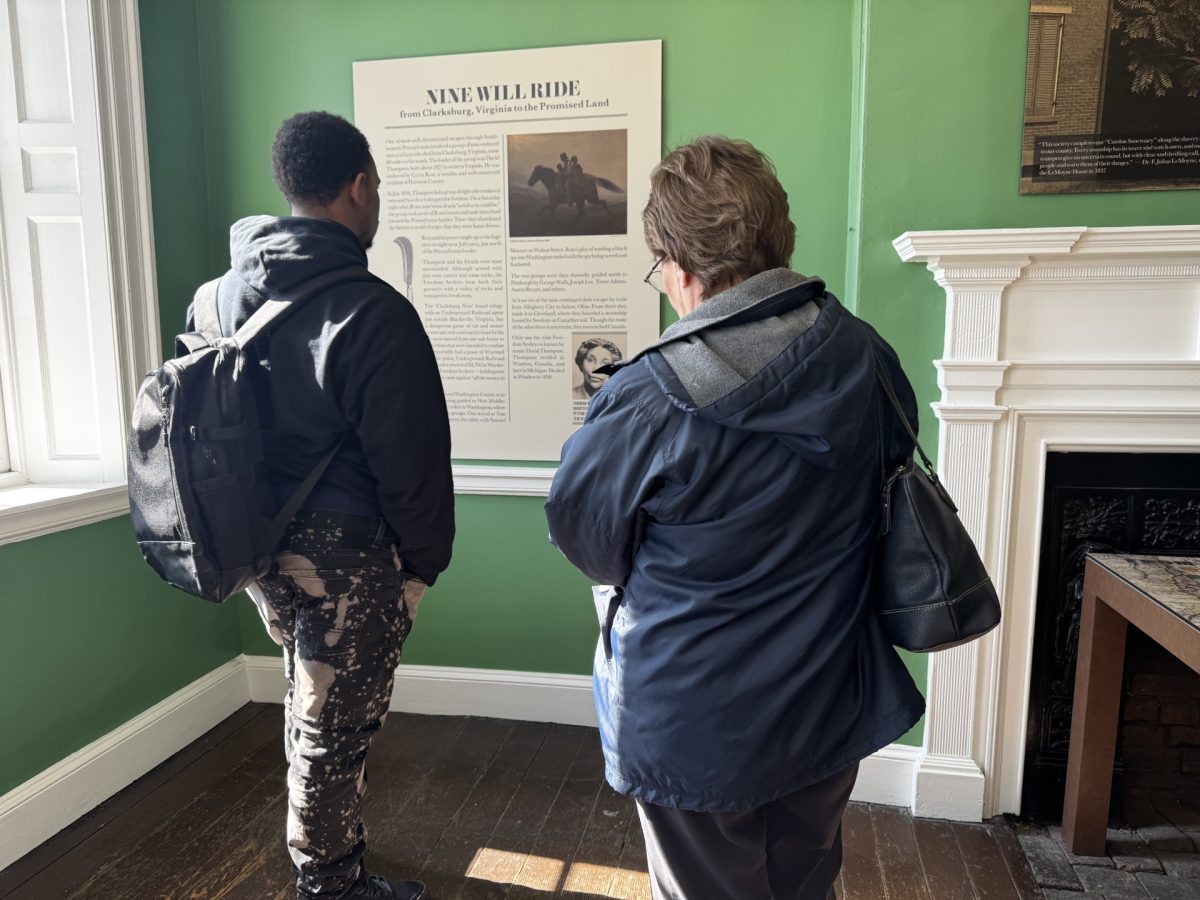
Symposium attendees then visited the LeMoyne House to walk through the Arcs of Freedom exhibit.
Washington & Jefferson College freshman Jorma Borish attended the symposium as part of a museum studies class and was surprised at what he didn’t know and how much he learned.
“The lectures brought an awareness to things I hadn’t heard about before, and that is a good thing. These are things that happened hundreds of years ago that I was completely unaware of, said Borish. “This is what people went through to gain freedom, and it’s important to talk about and to know about, especially now.”