

Experts offer tips on keeping travel costs down as fuel costs stay high
Experts offer tips on keeping travel costs down as fuel costs stay high
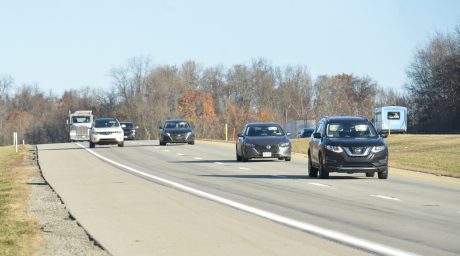
High fuel costs of this year aren’t preventing people from traveling over the river and through the woods to see friends or family for Thanksgiving.
But there are still steps people can take to make sure those holiday memories come with a lower price tag.
AAA is forecasting 81.5 million people will travel at least 50 miles from their home over Thanksgiving. That’s a drop of about 0.1% from last year, or about 120,000 fewer nationwide.
People out traveling won’t notice much difference on the roadways or in the airports, said Jim Garrity, director of public and legislative affairs at AAA East Central in Pittsburgh.
“We’ve had a couple years in a row of record highs in terms of the amount of people we were projecting getting out to travel, and this year is effectively stable, albeit a slight dip from last year,” he said.
In the Mid-Atlantic region — New York, New Jersey and Pennsylvania — those numbers are actually going up slightly, with the 10 million travelers representing a 2.3% increase from 2025.
Joan Rakosky, owner of All Seasons Travel in Charleroi, said she’s seen more people booking travel plans for this year.
Family destination trips for Thanksgiving are becoming more popular as older generations pass on, leading to different family dynamics, Rakosky said.
“They’re not going home to Grandma’s, so to speak,” she said. “So they’re taking that opportunity to do a family vacation.”
Where AAA sees declines, that’s likely due to the high price of filling up a tank this year. Compared to Thanksgiving 2025, airline tickets cost about 17% more on average. About 90% of Thanksgiving travelers are driving, where they’ll contend with average gas prices up by about $1 from a year ago.
When it comes to holiday travel, even those prices won’t make much difference in people’s habits, Garrity said. Amid record-high gas prices for the 2022 holidays, more people still traveled than the previous year, Garrity said.
“We do not see people canceling trips when gas prices go up,” he said. “We instead see them choose to be more efficient with their money in other ways, so that they can still prioritize their road trip.”
Even as overall travel saw a slight dip nationwide, the amount of unconventional travel — trains, buses, even cruise ships — is projected to go up about 4%.
“You could say that that’s a reflection of prices, but also there’s a lot of ways to travel,” he said. “A lot of people like to change it up year over year.”
The forecast for the Christmas travel season hasn’t been completed yet, but Garrity said it’s been another year of strong travel around the holiday season.
“Even if it’s people who are booking years in advance, we do see that people are still doing what they can to get out and take a vacation of some kind, whatever fits their budget … we’ve seen a lot of people who are still calling us at our travel agency and saying what’s out there, exploring their options,” he said.
Even if people are committed to traveling, there are still ways they can save.
Garrity recommends when booking flights, look for days or times with lower traffic.
“Of course, traveling on the holiday itself is always a great way to avoid traffic on the roads and maybe find some deals at the airport,” he said.
Rakosky recommends people book their holiday travel plans by July to lock in the best deals.
“Personally, my daughter and her family live in Texas, so I make her decide when she’s coming up by then,” she said. “She doesn’t always listen to her mom.”
Drivers smarting from the price at the pump can also stretch their dollar by slowing down, Garrity said. Higher speeds place more work on the vehicle, burning through that tank faster.
The cost of refueling shouldn’t cloud drivers’ judgment, Garrity said. They should always stop to refuel once they get down to a quarter-tank of gas — or for especially long road trips, half a tank.
It’s not just the danger of running out of gas before your destination.
Drivers who get stranded somewhere should also want gas in the car in case they need to turn the heat on, Garrity said.
“The closer to E you get, and you run the engine, the more you could potentially damage the internal components of your fueling system, and those repairs are going to cost a lot more than it would cost just to fill up,” he said.