

Testing along Montour Trail spur in Cecil yields conflicting results
Independent investigators are at odds with state and local officials over potential radiation exposure along the Montour Trail’s Westland Branch in Cecil Township.
An investigation earlier this year by a group of scientists, including former U.S. Department of Energy scientist Dr. Yuri Gorby, doctors, and environmental advocates found high levels of radioactive materials in pipes sitting close to the Montour Trail’s spur, but the Pennsylvania Department of Environmental Protection and Washington County Department of Public Safety said they conducted inspections and have concluded there is no public health threat.
“What I’m seeing alarmed me. I was shocked,” said Silverio Caggiano, a hazardous materials specialist, retired firefighter and Buckeye Environmental board member who was among the team that tested a stretch of the trail that runs parallel to 5D Field Services off Millers Run Road. “I’m very concerned about exposure and contamination there.”
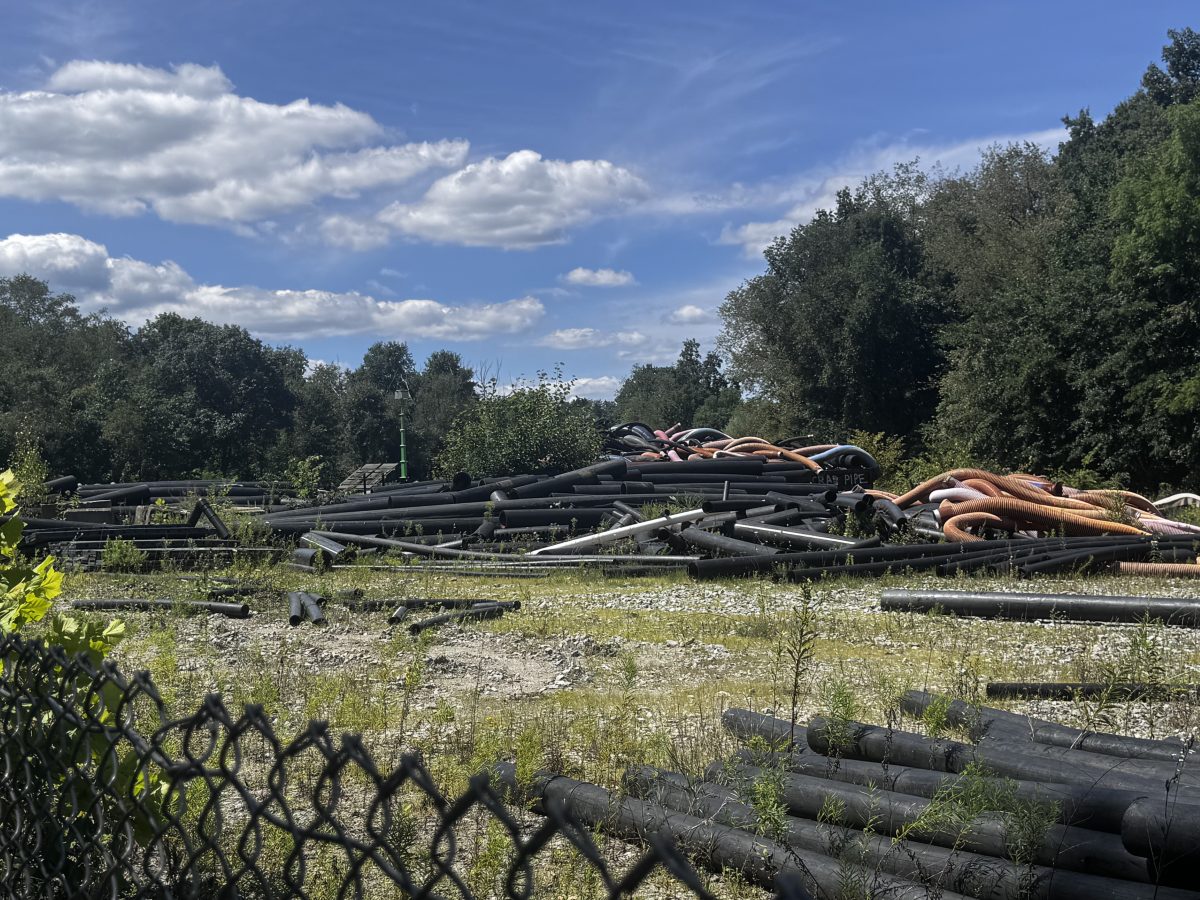
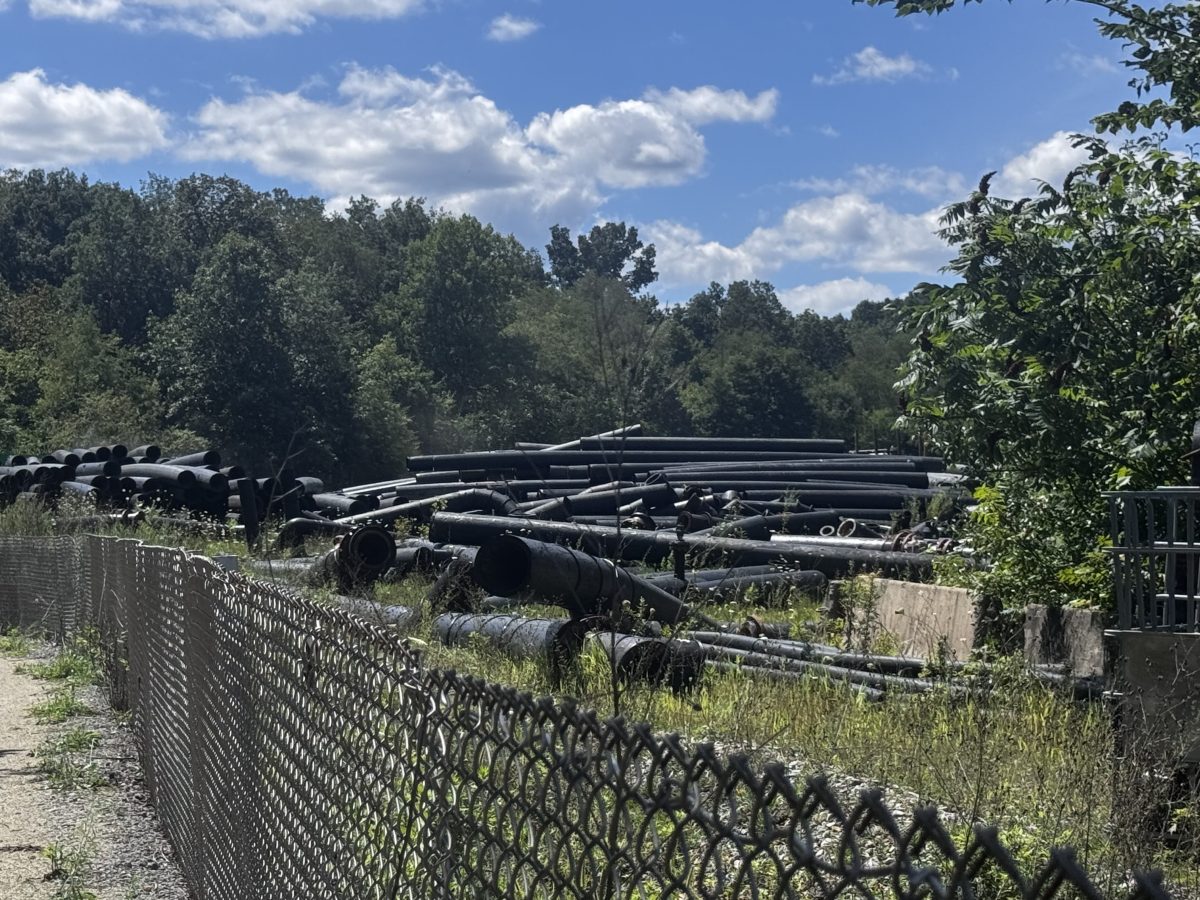
5D Field Services is a private facility that stores equipment and processes waste generated by the oil and gas industry.
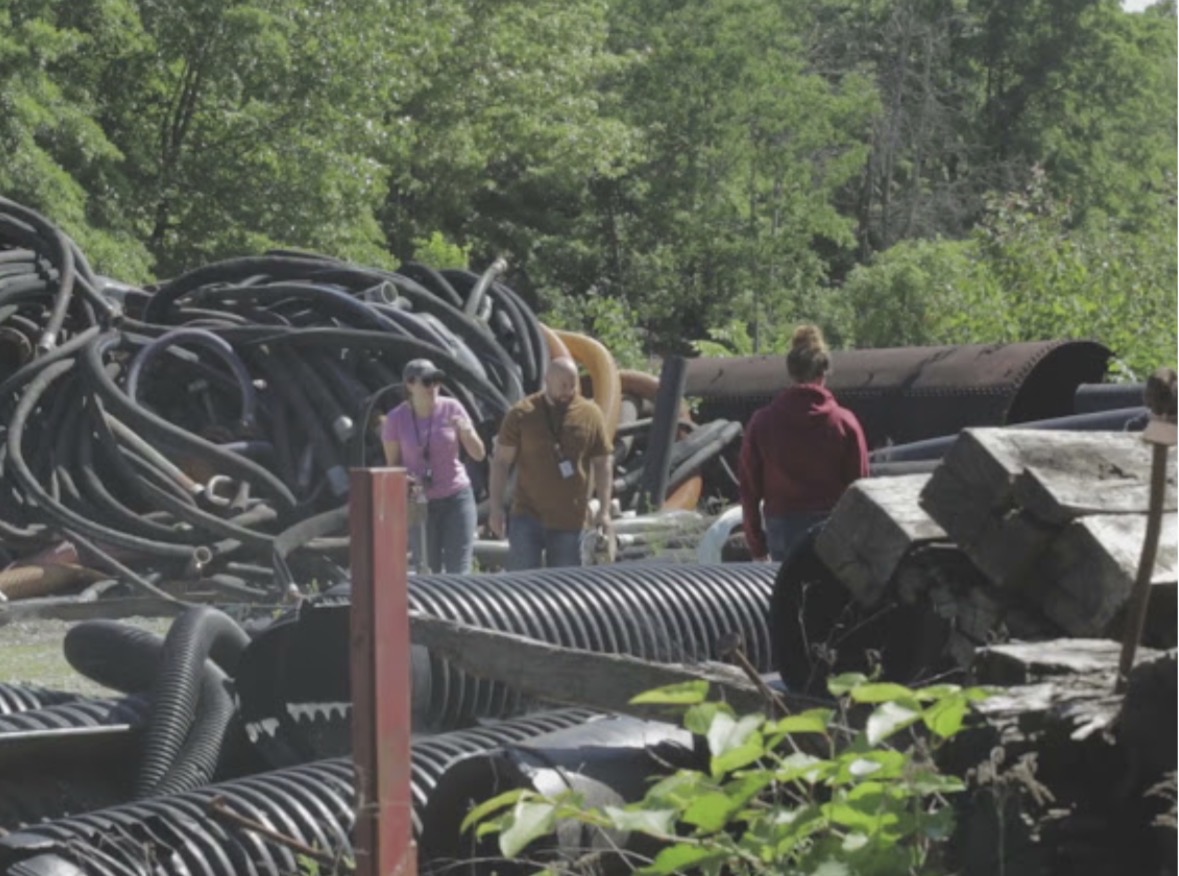
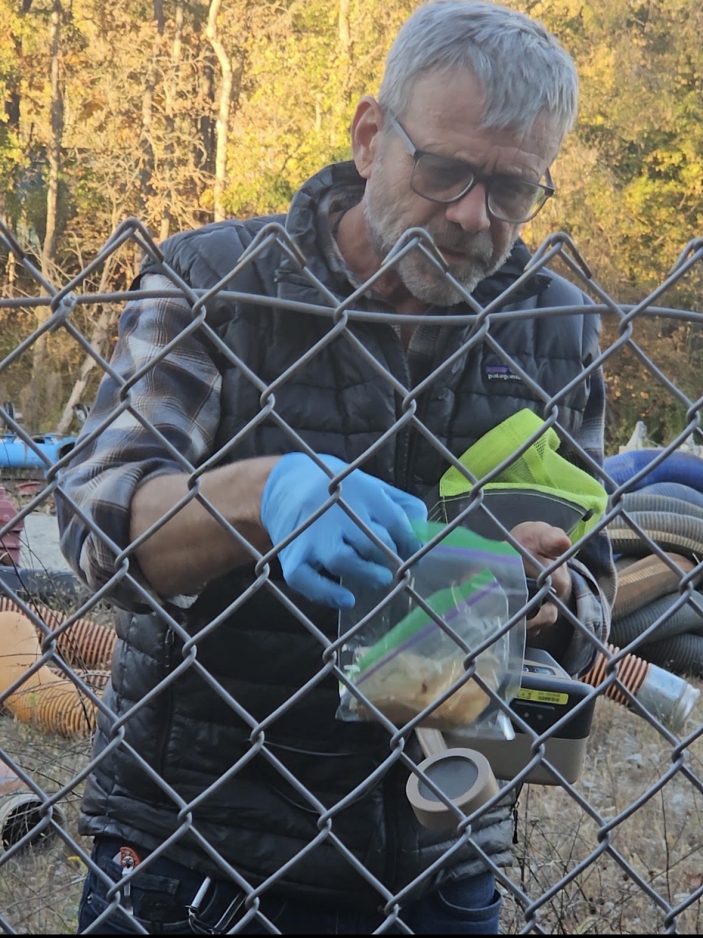
Environmental journalist Justin Nobel, who organized the site visit and wrote an extensive piece for Rolling Stone magazine, said the group used specialized Geiger counters and equipment and said they detected radium-226 levels as high as 3,300 picocuries per gram inside the property line – 600 times the 5 picocuries per gram limit set by the Environmental Protection Agency for Superfund hazardous waste sites.
The team determined the radium comes from loose “pipe scale” — radioactive rust and residue that flakes off the inside of used fracking pipes.
Because the facility is separated from the public trail only by a chain-link fence, the group, including Dr. Ned Ketyer, president of Physicians for Social Responsibility Pennsylvania, contends there’s concern that radioactive dust could become airborne and inhaled by cyclists, runners, and others who use the trail.
“There are mountains of these pipes and hoses lying around, and they have scale that can get airborne. There are potential exposure risks to residents living nearby, to workers at the site, to kids riding their bikes along the trail,” said Ketyer. “If the wind kicks up, if a truck drives by that kicks up dust that’s radioactive, that’s potentially an exposure risk that’s unnecessary. If water gets into the pipes, it can get into the creek that runs alongside the Montour Trail. That’s another potential risk to exposure.”
Caggiano noted radium-226, detected through the testing, is a dangerous form of radium that is linked to an increased risk of bone cancer.
“Unlike a lot of other radioactive materials, radium-226, once you get it in you, your system thinks it’s calcium, and it goes right to the bones. And it stays there for 1,300 years. It’ll remain radioactive,” Caggiano said.
But the DEP and the Washington County Department of Public Safety have reached different conclusions after conducting their own inspections and strongly reject the notion that the public is in danger.
In June, DEP inspectors, including specialists from the Bureau of Radiation Protection, conducted a site inspection on the facility property and along Montour Trail’s spur, in response to a complaint filed by Physicians for Social Responsibility Pennsylvania.
The DEP concluded that radiation levels along the trail itself remain within normal environmental background ranges.
“Readings taken along the trail did not indicate radiological impacts to trail users or any conditions that would pose a public health concern. Measurements taken on private property did not indicate conditions warranting additional protective actions for the public,” the DEP said in an email.
In July, the Washington County Radiological Response Team – a component of the Washington County Hazardous Materials Team – conducted a survey of the Montour Trail along the shared fence line in response to the independent study and the DEP study.
“Based on the measurements obtained during this survey, it is the determination of the Washington County Hazardous Materials Team that no radiological threat to the public was identified on the surveyed portion of the Montour Trail along the fence line shared with 5D Field Services,” said Joseph Pordash, logistics/hazmat coordinator for the Washington County Department of Public Safety, in an email.
In total, the Haz Mat team conducted 45 field screenings and measurements using a Geiger counter that detects radiation exposures and radioactive contamination and an isotope identifier.
“We identified no detectable radioactive contamination or radiation exposure above our established investigative thresholds along the surveyed portion of the Montour Trail,” said Pordash, who also is a state-certified radiological officer serving Washington, Fayette, Greene, and Allegheny counties and a certified radiological specialist.
In early August, DEP officials met with Montour Trail Council volunteers to review their findings.
“DEP officials stated in early August 2026 that, based on their testing, the site does not pose a public health risk,” Montour Trail posted on its website. “(DEP) results, using the appropriate and calibrated instrumentation, does not indicate that a public health hazard is present as described in press reports, including along the Westland branch.”
MTC said it will share highlights from DEP’s final report on its website once it is available and encouraged those with questions about the investigation and DEP’s findings to contact the DEP.
Some residents have voiced concerns with the Cecil Township Board of Supervisors, but Supervisor Cindy Fisher said the responsibility for taking action regarding radiation issues lies with the DEP.
“We’ve had people reach out with concerns, and the township is concerned as well, but the township doesn’t have the ability to regulate that. It falls squarely under the DEP,” said Fisher. “We support residents and people searching for answers, but other than saying we support them and reaching out to the DEP, there’s nothing the township can do.”
Meanwhile, independent investigators like Christina DiGiulio, an environmental chemist and a certified optical gas imaging thermographer who serves as director of environmental science and investigations for Physicians for Social Responsibility Pennsylvania, strongly disagree with the official findings and have pushed back, maintaining the radioactivity levels they recorded exceed safe standards.
“The DEP can claim whatever they want until the cows come home, but in our radiological testing, we’re seeing high levels of radium,” said DiGiulio. “The radioactive readings we’ve gotten are correct. I saw what I saw, and I know what I know. Everybody’s saying it’s fine, and that’s what really worries me. Our whole point is to keep this on the community’s radar without freaking them out. But they should be informed and they should know there’s risk.”
For many Cecil Township residents, the standoff between the independent group and the state and local agencies is more personal.
The Westland branch is within the boundaries of an area that has seen a high number of cases of Ewing sarcoma, a rare and aggressive pediatric bone cancer that typically affects fewer than 250 children and adolescents across the United States each year. But between 2008 and 2019, six cases of Ewing sarcoma were diagnosed within the Canon-McMillan School District.
Among them was Luke Blanock, a beloved high school baseball player who died in 2016 at the age of 19 after a 2 1/2-year battle with Ewing sarcoma.
Since his passing, his mother, Janice Blanock, alongside other bereaved parents, have pressed the state for deeper environmental transparency.
To date, medical literature, a 2020 investigation by the Pennsylvania Department of Health, and investigations by other agencies have found no proven scientific link between radiation from shale gas waste and the onset of Ewing sarcoma (the state’s 2020 report did not identify statistically significantly higher rates of Ewing’s tumors or other childhood cancers in fracking counties, including Washington County, than in non-fracking counties).
But families argue that a lack of conclusive data is not the same as proof of safety, and point out the significant number of fracking wells that sit in their backyards.
Blanock is deeply concerned about how fracking waste is managed in Pennsylvania, and has called for more stringent regulations for toxic, radioactive materials that are discarded across the state.
“This is serious stuff. This is a public trail with people riding their bikes, pushing their babies, taking walks, and there are all of those pipes dumped right next to it,” said Blanock. “I can never truly say fracking caused my son’s cancer, but we have to do better and it’s frustrating to me. I know fracking’s not black and white, and we have to do it more safely. Nothing’s bringing Luke back, but I have children and grandchildren and I care about their future. We have to take care of people and we have to take care of our planet, and we’re killing it.”
Since the independent group’s study, no trespassing signs have been posted at 5D. The company did not respond to a request for comment.
The DEP does not plan to perform further soil sampling because its inspection found no public health threat.
“DEP will continue to monitor the site and oversee activities associated with the storage and management of materials related to oil and gas development to ensure compliance with Pennsylvania’s environmental laws, regulations, and permit requirements,” the agency said via email. “DEP will continue evaluating public concerns and will take any additional action warranted by inspection findings.”