

The courage to build a better future
Having the courage to build a better future is a discipline. It’s not pretending things aren’t broken. It’s making the decision to look for what could be better and then moving things forward when it would be easier not to.
After a lifetime of watching people in classrooms, hospitals, boardrooms, and communities hanging on by a thread, I’ve come to believe the people who make a difference aren’t the ones who ignore and criticize reality. They’re the ones who refuse to be defined by it.
That’s harder than it sounds.
Because life can be messy and uncertain, things can feel out of control. When that happens, we focus on everything that’s going wrong, but that doesn’t help. Progress only starts when someone decides to change things, and they don’t do that because the path is easy or clear. They do it because staying stuck is the worst option.
That’s where your mindset becomes everything.
A former instructor of mine, Dr. Denis Waitley, spent years studying high‑performing individuals. He worked with Olympians, business leaders, and people who had to deliver results under pressure. What he found was that they spent their time training how they think. They didn’t wait to feel confident. They practiced confidence. They didn’t replay what they did wrong. They focused on what they could do right. They understood that the obstacles they faced were real, but they didn’t give those obstacles all of their attention. They focused on what could happen.
That’s discipline. And like any discipline, it takes time to build. It’s trained optimism, the intentional practice of directing your attention toward possibility instead of paralysis.
Our current culture rewards the opposite. Negativity is easy. If you want attention, you point out what’s broken and shout about it. You emphasize the negative, and the more you do that, the bigger those problems appear.
But that’s not how futures improve or how life gets better.
I’ve sat in too many rooms where capable people spent hours going over past failures, financial losses, missed opportunities, and decisions that didn’t work. The energy drops. The conversation grows tense. People get stuck in a loop that’s hard to break. That’s because focusing on what went wrong doesn’t create anything better.
This is when it’s important for someone to ask a different question: “What’s possible?” That’s the only question that moves anything forward.
Even in tough times, something good can happen. But you have to be willing to look for it. And once you do, things change. You start to see options that weren’t obvious before. Not because they suddenly appeared, but because your attention, your thinking, your focus, and your attitude shifted.
That’s what Dr. Waitley was getting at with trained optimism. When you condition your mind to look for possibility, it becomes easier to find. And that’s what matters.
I’ve been involved with a dozen organizations that were right on the edge and turned themselves around. Not because conditions improved overnight, but because their leaders changed how they looked at their situation. They stopped asking, “Why is this happening to us?” and started asking, “What can we do?” That question doesn’t solve everything, but it sure does change it.
Why? Because energy follows focus. And once energy starts to move, people move with it. Everyone wants to be with a winner. The world doesn’t need more critics shouting about what’s wrong. What it needs are people willing to build something better even when the path isn’t clear and the outcome isn’t guaranteed.
Looking for the good isn’t denying reality. It’s choosing to shape it. That’s the work. It means learning to reframe, deciding to move, and then doing something about it.
So the question becomes simple:
What’s the next thing you can move forward?
Because once you take that step, energy follows, and the future starts to shift.
That’s how better futures are built — by people willing to move.
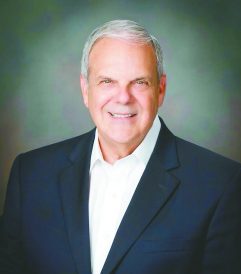
Nick Jacobs is a resident of Windber.