

OP-ED: Josh Shapiro and the Illusion of political strength
Gov. Josh Shapiro is frequently described as popular, strong, and politically formidable. That description has been repeated so often in Pennsylvania political coverage that it is hardening into conventional wisdom. But repetition is not proof. When examined from Washington County – where economic and infrastructure challenges remain unresolved – the image of Josh Shapiro as a broadly popular and effective leader does not hold.
What Pennsylvanians are being shown is not organic political strength, but a carefully engineered projection – a political hologram. Like any hologram, it appears solid from a distance, commanding attention so long as it is continuously powered. But it has no independent existence. Turn off the power – the money, the messaging discipline, the controlled exposure – and it fades.
This is not an argument about ideology.
It is an argument about political substance and priorities.
Meaning of ‘popularity’
Modern political popularity is a shallow metric. Job-approval polls measure visibility, tone, and familiarity far more than performance or durable support. Voters are asked whether they “approve” of an officeholder without being asked what they approve of, whether conditions are improving, or whether concrete problems are being solved.
Gov. Shapiro benefits greatly from this structure. He presents well on camera, speaks fluently in press briefings, and projects confidence in short, tightly framed appearances. Stage-managed events during emergencies or infrastructure incidents create an impression of leadership that polls readily capture but rarely interrogate.
But impressions are not coalitions.
Visibility is not strength.
When approval numbers are examined beyond headlines, support varies sharply by region and voter type. Outside major metropolitan areas – particularly in counties like Washington – approval softens noticeably. That is not the profile of a deeply rooted statewide leader. It is the profile of an image dependent on presentation.
For residents of Washington County, the disconnect is especially clear. The county continues to face long-standing challenges: uneven job growth, infrastructure needs, energy policy uncertainty, and workforce alignment issues. Yet it is difficult to point to sustained, hands-on engagement from the governor’s office focused on addressing these problems.
Leadership is not measured by press conferences in Harrisburg or national television appearances. It is measured by attention to places like Washington County – by policy follow-through, regional investment, and consistent engagement. On those metrics, the Shapiro administration’s record is thin.
This does not look like a governor deeply invested in Pennsylvania’s regional challenges. It looks like a governor managing an image.
Controlled exposure
Real political strength attracts noise – supporters, critics, debate, and unscripted engagement. What surrounds Shapiro instead is insulation.
His public presence is dominated by controlled press settings and carefully staged events designed to preserve image rather than invite examination. He performs best where the environment is curated and struggles when questioning extends beyond prepared narratives.
This fragility is not incidental. On multiple occasions, Shapiro has responded defensively to sustained criticism, reframing challenges as unfair or politically motivated rather than addressing underlying issues. Candidates with real political mass absorb scrutiny and convert exposure into authority. Projections cannot. They must be protected.
The same pattern appears within his own party. Rather than welcoming intraparty competition that might test the depth of his appeal, a narrative of inevitability is deployed early and often.
That is not confidence.
It is image protection.
Capital dependence
The most telling feature of Josh Shapiro’s political operation is not early fundraising, but the purpose of the spending.
Enormous sums are being expended by a non-candidate not to compete in an election, but to manufacture and sustain the illusion of a candidate itself. This is not the cost of campaigning. It is the cost of fabricating the illusion of political strength from political weakness.
A real candidate precedes the money. Capital amplifies what already exists. Here, the money must come first – and continue indefinitely. Spending persists across years, outside election cycles, even when Shapiro is not a declared candidate. That pattern does not suggest momentum. It suggests maintenance.
What makes this especially troubling for Pennsylvanians is that this effort does not resemble an investment in governing the commonwealth. It resembles an investment in positioning for higher office.
A governor focused on a second term would be expected to deepen engagement with counties like Washington and tackle persistent economic challenges. Instead, the emphasis appears to be on national-style messaging, tight narrative control, and image preservation.
In this model, Pennsylvania becomes a platform rather than a destination. The governorship is treated as a stage, not an end state. That helps explain why so little substantive progress has been made on issues that matter most to local communities – and why even less can be expected if the governor’s attention continues to drift upward.
Josh Shapiro is not popular in any meaningful, durable sense. He is not strong in the way strong political leaders are strong. And he is not inevitable.
What is presented to Pennsylvanians as popularity is, in reality, a carefully manufactured illusion – a political hologram purpose-built for power, sustained by continuous reinforcement, and protected from scrutiny. His political profile does not appear self-sustaining. It exists only so long as money, message discipline, and controlled exposure keep it illuminated.
Remove that power source, and the image loses coherence. Shine sustained light on it – real scrutiny, real comparison, real accountability – and the hologram fades. What disappears is not a formidable leader, but the illusion that one ever existed.
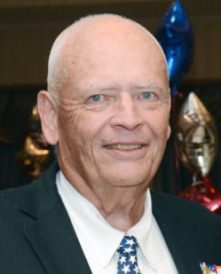
Dave Ball is the former chairman of the Washington County Republican Party.