

Brown was instrumental in Pony League’s growth
EDITOR’S NOTE: This is the second in a series about the 75th anniversary of PONY Baseball and Softball, Inc.
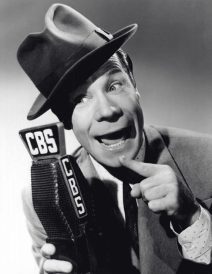
Joe E. Brown was a heralded comedic actor, but his involvement with the beginnings of PONY Baseball was no laughing matter.
Brown was serious about helping and providing a clear path for kids. It has been long held that Brown understood kids and knew baseball, which made him ideal to become the first president for Pony League Baseball.
Prior to becoming a Hollywood star, Brown played semi-professional baseball during the summer. He was modest about his baseball abilities, likely because it was a side job to his acting. However, his abilities to play the game were confirmed in 1920 when he was asked by Boston Red Sox manager Ed Marrow to sign a contract with the club.
Show business, however, won out. Brown was a heralded performer by then and baseball was no guarantee even with his acknowledged talents.
“In listening to Lew Hays in particular, Joe E. Brown is the person he talked to because he was the person who was able to take the Pony story forward with the most appeal and following,” said Leo Trich, who became involved in Pony baseball in the early 1970s. “(Brown’s) name alone opened quite a few doors for other organizations, not only in our tri-state area initially, but then nationally.
“There is no question that his celebrity was a major plus in helping Pony League expand as quickly as it did. He was a baseball person in his own right, and later his son, of course, with the Pirates, being one of the top general managers in Major League Baseball and so forth. That was a great family to get involved in a program early on.”
Joe E. Brown mixed both his acting career with the game, he portrayed baseball players in some of his best films, including “Elmer the Great (1933)” and “Alibi Ike (1935).”
He was one of the most popular American comedians in the 1930s and 1940s, with successful films such as “A Midsummer Night’s Dream,” “Earthworm Tractors,” and “Alibi Ike.” In his later career, Brown starred in “Some Like It Hot (1959),” as Osgood Fielding III, in which he utters the famous punchline, “Well, nobody’s perfect.”
Lew Hays – one of the founders of PONY Baseball – wrote in the book “Pony Tales & Diamond Dust” – about Brown: “He understood kids and he knew baseball and that made him an ideal first president for PONY League Baseball. Joe E. Brown was already in his early 60s when he first joined PONY Baseball as a member of the Board of Directors, went on to become its first president when the organization was incorporated in 1953. He brought to the fledgling movement (recognition) only someone of his reputation could provide.
“He had spent a lifetime entertaining people, from circus and Vaudeville, the movies, the stage, radio and television and almost without exception, he left them laughing but when it came to setting policy dealing with the youngsters in Pony League, he was deadly serious.”
After his son, Don, was killed in WWII, Brown traveled thousands of miles at his own expense to entertain American troops. He was the first man to do so, traveling to the Caribbean and Alaska before Bob Hope had and prior to the USO being organized. Brown was one of only two civilians to be awarded the Bronze Star in WWII.
Brown was also a television and radio broadcaster for the New York Yankees in 1953 and he was said to have spent time with Hall of Fame player Ty Cobb in the last days before the baseball icon passed away.
His other son, Joe L. Brown, served as the general manager of the Pittsburgh Pirates from November 1955 through the 1976 season. He built World Series championship teams in 1960 and 1971 and kept the Pirates in contention for most of his career. Pittsburgh won five National League East Division titles from 1970 through 1976.
The younger Brown returned to the Pirates as general manager late in 1985 and made a few trades that began the process of building toward three consecutive division crowns in 1990-92.