

‘The racetrack’s worst nightmare’
Tragic barn fire 25 years ago at The Meadows still hangs heavy
Patty Key would play with the family stable of filly yearlings on the farm, teaching them to trust, to be comfortable and to love.
“You don’t pick them,” she said. “They pick you.”
So many through the years picked Patty, who along with her late husband Bob Key bred Standardbred winners and built expectations of greatness from their racing stable.
But a phone call one morning 25 years ago turned the joy the Keys came to know with their “babies” into despair.
What Bob Key learned from that call was a horrific barn fire raged at The Meadows July 6, 2001, and claimed the lives of 28 horses, 15 of which belonged to the Keys.
Patty had taken to one filly — Key Luckie.
She had to ask her husband: “Was she in that barn?”
Sadly, Key Luckie was.
Devastating cannot possibly describe the sadness.
“We had a lot of my fillies in there,” Patty Key explained. “I had one filly who came out of that field who was shy and nervous. You get that among them, no trust. But I’m in there with them. It took me almost a year to get her to trust me. And (the fire) was right before she was ready to go south for training. She was a pacer and she was going to be very special; that’s what we were being told.
“I just broke down because she took such a long time to trust. And then to have something like that happen. It devastated me. But it just was not me.
Your trainer finds the grooms who they think will match with the horse — the personality, the patience, and these caretakers become emotionally involved with them. They love their animals and the trainers are looking at the talent and coaching.
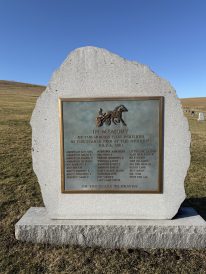
“I can remember we went to the memorial service afterwards,” she continued. “You could see and feel people breaking down. It was a lot of emotion. You tried to comfort them and put your emotions aside. It was one of the hardest things my husband and I had to live through. When I saw the names on the memorial. … We went home and I just broke down. It took a long time for me to go back up into those fields again because it just took a toll on me. My husband was devastated. He’s the one who bred them, the one who staked them. He would get excited every year with the new crop of animals that we had for that year. He loved every bit of the sport. But that day, he took it hard.”
The Keys, of Leechburg, lost 15 horses worth about $1 million in the fire. Bob Key had spent about $200,000 in stakes payments to make the horses eligible for upcoming races.
At the time, the Keys owned about 200 horses. The couple won the prestigious Hambletonian in East Rutherford, N.J. with American Winner in 1993.
Devastating losses
The horses and equipment lost in the fires were valued at about $2 million and the barn at about $150,000. The fire was the worst in the track’s 63-year history.
Former guard Dave Hoffman spotted smoke coming from one of the barns at about 2:30 a.m. and found the building engulfed in flames. He broke down a door and pulled out one horse but couldn’t get to the others.
Hoffman was credited with saving a barn next to the burning structure that contained 44 horses. Hoffman grabbed a hose and wet the structure, preventing the fire from spreading.
Trainer Mario LaBrasca of Fredericktown also lost eight horses, Joseph Antonelli of Washington lost his entire stable of four horses and Greg Wasiluk of Wilkes-Barre lost one horse in the fire, track officials said.
The wooden barn that burned was previously a spa where horses would exercise in a pool.
“When it comes to racing. . . it’s probably the most devastating and words won’t adequately describe it. You have to remember for trainers and owners, it’s not always for the money,” said longtime track announcer and harness racing historian Roger Huston. “They fall in love with their horses. And on that day, it was like one of your offspring had passed. Even for people like me, I knew the trainers and some of the owners of horses, it’s just devastating. You feel everybody’s pain and that pain never goes away.
“I guarantee you, the people who lost animals in that fire have never gotten better from it. It’s like losing a family member. To be there that morning, it was probably one of the hardest things I’ve ever had to go through in my life. When we had the ceremony — ringing the bell 28 times — a day or two later at the racetrack and Rick Beinhauer said he and Beinhauer funeral homes would provide a memorial and a place to be buried. It was emotional.
“I don’t want anybody to say it’s just a horse — they’re more than that to all of us.”
Christine Blaine, the track’s spokeswoman at the time, said, “It was absolutely the racetrack’s worst nightmare.”
Added Patty Key: “It was a devastating loss. They were like our babies. They were the cream of the crop. I couldn’t believe it. I thought they might be sick when I got the call, but this was the last thing I thought could happen.”
All 28 of the barn’s stalls were full, and the charred bodies of the horses were plainly visible as state police picked through the remains. A cause of the fire was never given.
Beinhauer, the owner of a nearby pet cemetery called Peaceful Pastures and a horseman himself, indeed donated burial plots for the horses, which would normally cost $1,200 each.
“The horses deserved better than that,” Beinhauer said.
Fire officials said there wasn’t much hope for them when they arrived.
Walter (Skip) Alrutz, a sergeant with the South Strabane police who worked part-time at The Meadows as a security officer, fire marshal, said it was hopeless when he arrived.
He said inspections found no problems at the barn that burned.
The track’s guards on duty contacted him.
“They called me pretty much right after they called the fire department,” Alrutz recalled. “It was pretty much still blazing when I got there. Fire departments were attacking it; so, they were knocking it down. But it was pretty much a total loss by then.
“I was sick, because I know that it’s almost impossible to get horses out of a burning barn.”
Added Tim Solobay, longtime firefighter and chief from Canonsburg and former fire commissioner of Pennsylvania: “It was old wood, and the barn was full of hay. The poor horses. I know some of the owners who tried everything they could do to get their horses out. A lot of times I think (horsemen) care more for their animals than they do for themselves.
“It was a very tragic day; without question. Unfortunately, it was just so quick, so fast.”
Coming together
Pastor Joe DiDonato, who has had his ministry at The Meadows for nearly 33 years, said everyone was welcomed into the chapel for a memorial service. The group pondered what it could do to help. A fundraiser was suggested to help trainers and owners.
“I asked why start a fundraiser?” DiDonato said. “Our ministry is a 501 C 3 nonprofit. I thought having folks send the money was right – it was the market for the fire victims. They could send it to our ministry and then we’d take care of dispersing those funds. I didn’t realize how much work I was putting on myself because we raised $93,000.
“That was a lot of money to have in my account. We formed a committee with the late Mike Jeanout heading it up as the general manager. We broke down each stable, each horse and equipment they lost, time lost as far as the caretakers, the hours they couldn’t work. And we broke all that money down and cut it into checks to cover all those different needs. It was amazing how we were able to help so many folks.”
Blaine, who is now the chief executive officer of Sports Facility LLC (the Washington Wild Things), said that while the circumstances and results of the fire were horrific, it did bring The Meadows community closer together.
“Something wonderful came out of it — the support they gave to each and the support received from the public,” Blaine said. “A community came together to take care of one another. A lot of fundraisers were held.
“We forget that sometimes. People are willing to help one another. A terrible sadness that I’m sure reigns today with those who lost their animals, did bring out the best in people. The Meadows is a community to itself. I think the ties got stronger after that.”
Full circle
After Bob Key died in 2021, Patty Key lost her enthusiasm for harness racing. The passion for the sport that existed between her and her husband was absent.
Last fall, Patty Key opted to re-enter racing competition. She is operator of Winning Key Farm, Worthington.
She ponied up $1 million to purchase Dejeuner, who became the highest-priced yearling filly ever purchased at auction.
Bob Key was a significant owner and his stable was a force at The Meadows and nationally for many years.
Key also owned a horse, American Winner, stabled at The Meadows, who became a Hambletonian champion.
Last summer, Key and American Winner were enshrined in Goshen, N.Y. at the Harness Racing Museum and Hall of Fame.
“I had been trying to rebuild my farm and reinvent it, and we have been going after the most lucrative pedigrees for our broodmares and basically my main interest is in breeding,” she said at the time. “It always has been since day one. I’ve always been in love with the yearlings and the whole process of running out of breed farm.”
Her interest and exuberance back, Key has overcome but will never forget.
“I’m back to a point now where I feel like it’s pleasure again. We have new stock, new babies. But you never forget what you had.”