

Hays was a founding father of Pony League
EDITOR’S NOTE: This is the third in a series about the 75th anniversary of PONY Baseball and Softball, Inc.
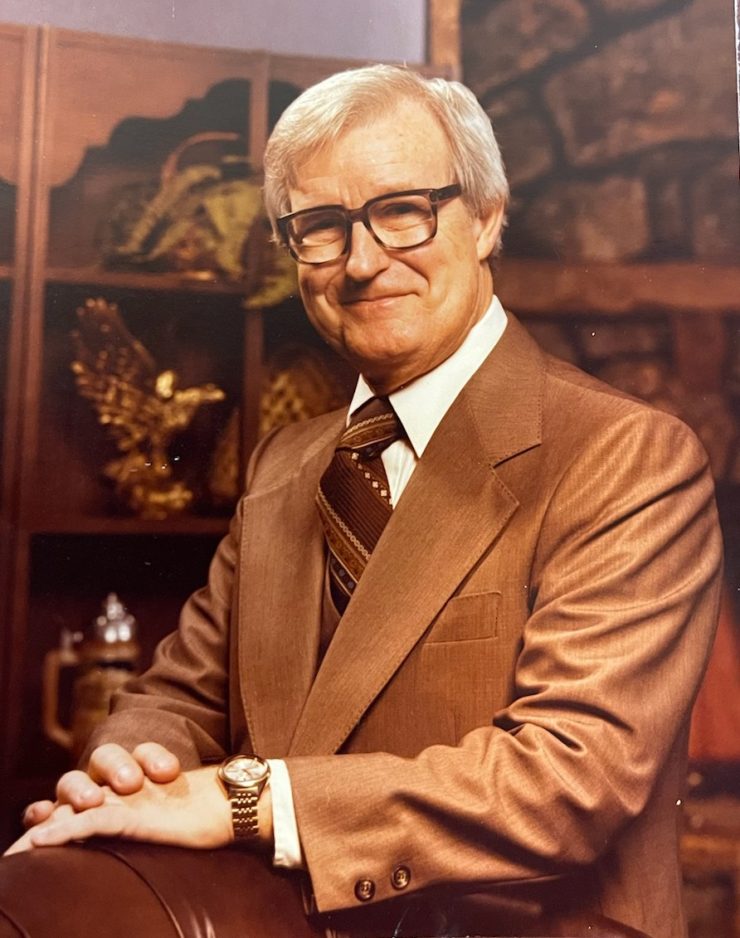
Lew Hays was not the biggest baseball fan, but he was a champion of kids. His belief in keeping them busy was a home run for Washington, and eventually, the world.
“He has to be credited with getting Pony Baseball – as we know it today – off the ground,” said Leo Trich, a former PONY Baseball commissioner. “The program had started, in Washington, strictly local. He happened to be the sports editor at that time and it kind of put him in a unique position to run with the program.
“He was kind of the right person at the right time. I learned from Lew Hays very early on, had the city of Washington area come up with a sports program that happened to be football, or happened to be basketball or happened to be water polo, it wouldn’t have made a difference to him.
“Lew liked baseball. He loved the game of baseball, but he always used to tell us that baseball was merely a tool,” Trich continued. “He felt it was important to keep young kids off the streets, keep them in an organized setting; one that was athletic, but also good for them physically. He just genuinely believed in a concept of giving kids an opportunity to play a sport, keep them safe and keep them off the streets.”
Hays, a native of Butler, came to Washington in 1946 and served as sports editor of the Washington Observer and Reporter newspapers until he resigned in 1953 to become the first full-time commissioner of PONY Baseball Inc., an organization of which he was one of the founders in 1951.
Hays succeeded the late comedian Joe E. Brown as president of PONY Baseball in 1965 and held that position until 1981.
He also served as chairman of the board of the United States Baseball Federation and of Baseball America Foundation and founded the Junior Olympics Super Series that matched champions of 15- and 16-year-old baseball players representing five different leagues.
Hays is co-author with former PONY Baseball president Roy Gillespie of “Pony Tales & Diamond Dust,” a documentary of the early years of the organization.
Hays was a graduate of Muskingum College and sports editor of the Brownsville Telegraph for eight years before moving to Washington.
Hays passed away in 1998 and upon his death, Pony Field in Washington was renamed Lew Hays Pony Field. The Pony League World Series has been played 63 times in Washington, 62 times at Lew Hays Pony Field and the city has hosted the event the past 42 consecutive years.
Hays’ daughter, Peggy Lou Hays, said her father was committed to his faith, family and community pursuits.
“I think he was comfortable staying with it and enjoyed doing it, although he was never a baseball player,” she said. “The only sport that I’m ever aware of him playing was soccer. That was as a young student. I don’t think baseball was necessarily the attraction as much as the service to the people who were going to benefit from it.
“His ability to visualize and see potential and to be a good leader in terms of bringing people together in making decisions was a positive characteristic. He gathered a group of really good people for what he wanted to get done. That’s an ability to build that kind of framework for your organization. He was able to do that. I always felt like that was really one of his strengths – organizational strength, just the building strength. He put a lot of good people around him to be able to succeed.”
In “Pony Tales & Diamond Dust,” Gillespie wrote: “As the program expanded, input came from all sections of the country, through field directors, league officers, parents, recreation directors – just about anyone interested in young people and baseball.”
“A single voice, however, stands out through those three decades. Lew Hays, the sports editor in Washington when the program was founded, brought a talent for organization to the founding group, and remained to nurture the dream, to construct the national field organization that would ensure the dream becoming reality. He had the ability to look beyond the trees, to view the entire forest.”
Perhaps Hays’ daughter knew and said it best about this leadership and trailblazing nature.
“He was probably not an extraordinary person,” she said. “He was very family-oriented. And we (his children) were the beneficiaries of it because as he had to travel, he always saved at least one extensive summer travel and we all went. Along we came. He worked and we had fun. We got the benefit of that. He was also church-oriented. It was a good life. It was never an over-the-top-life. We lived pretty much as average people in the community.”