

The streets of LA
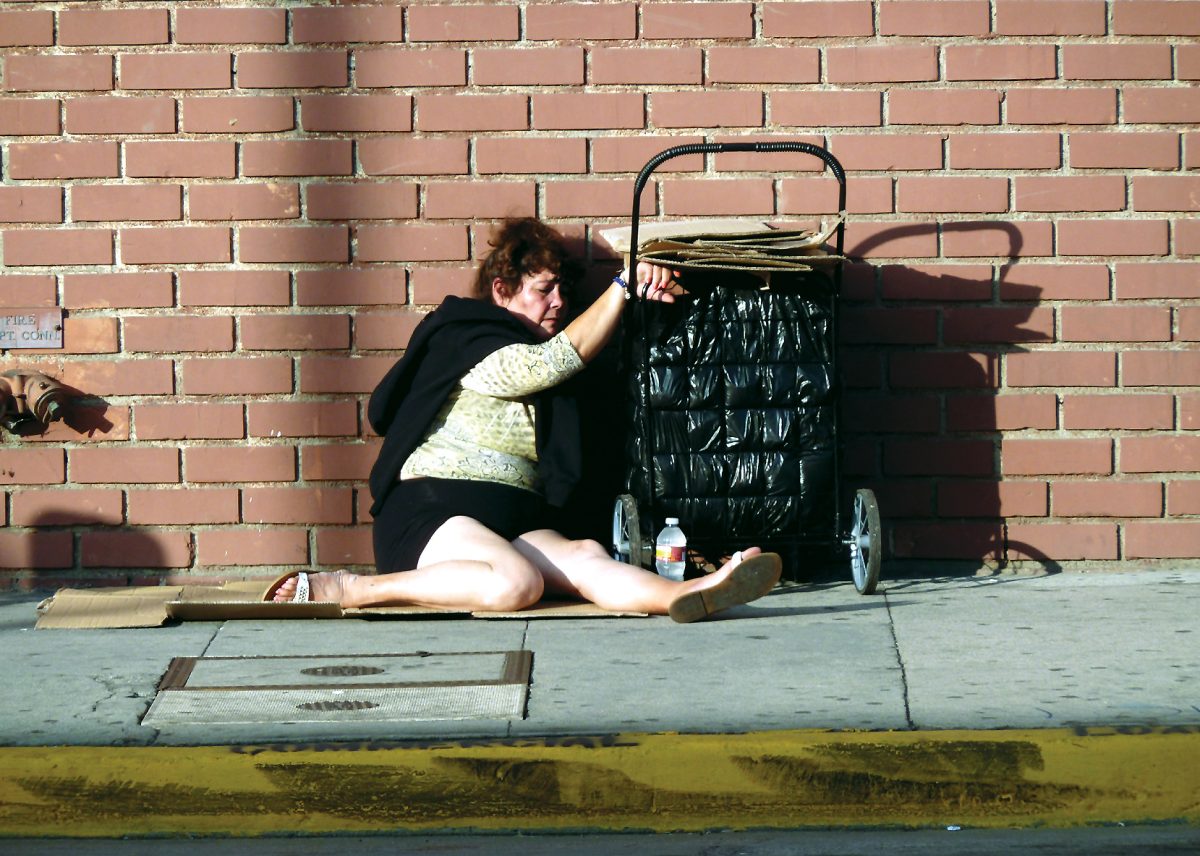
A homeless woman holds on to her cart while taking a nap on Seventh Street in Los Angeles’ Skid Row.
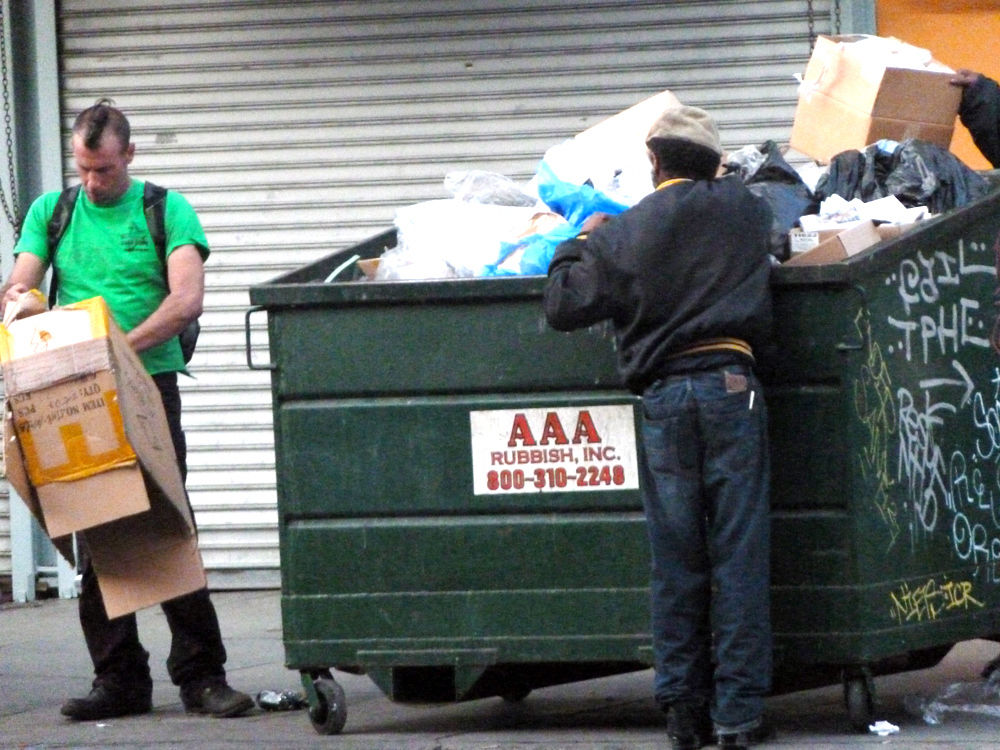
Two homeless men rummage through a Dumpster in Skid Row, looking for bedding material and food.
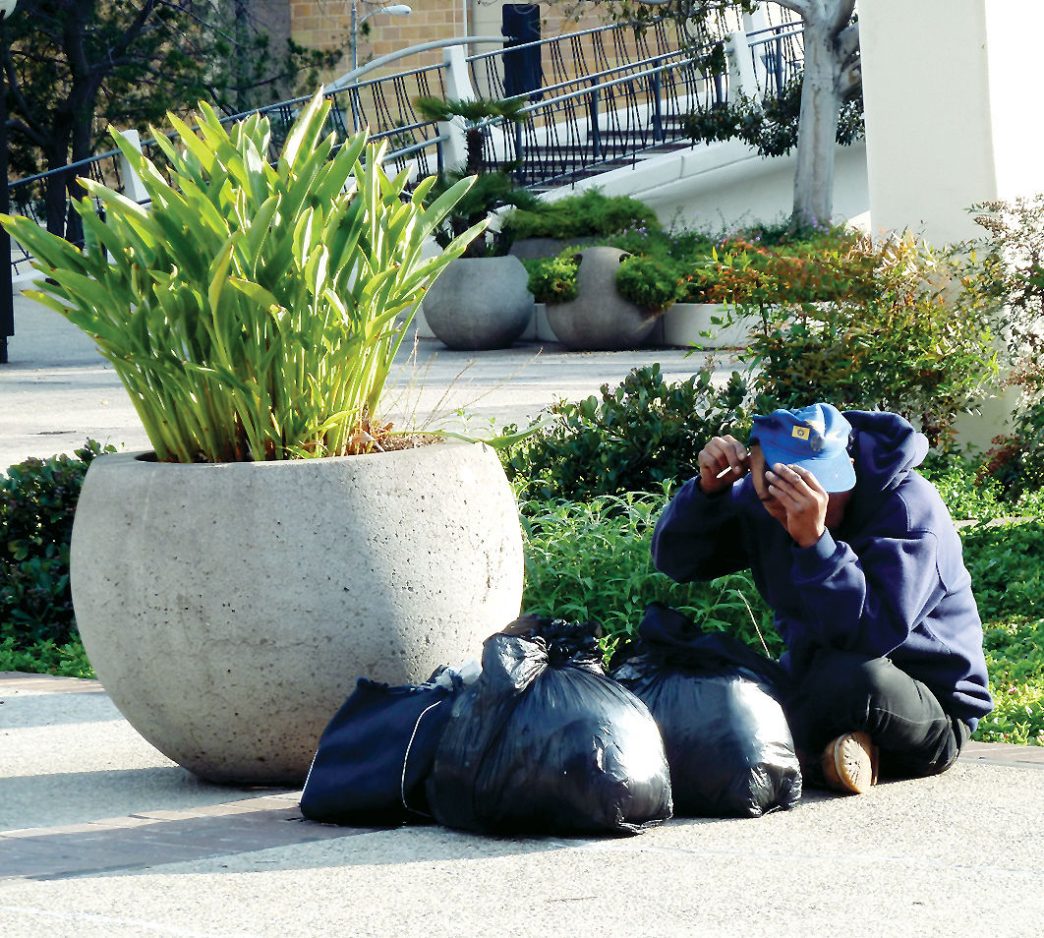
A homeless man tweezes the hair on his head while sitting in a plaza across from Los Angeles City Hall, located just a few blocks from Skid Row, on a Saturday afternoon.
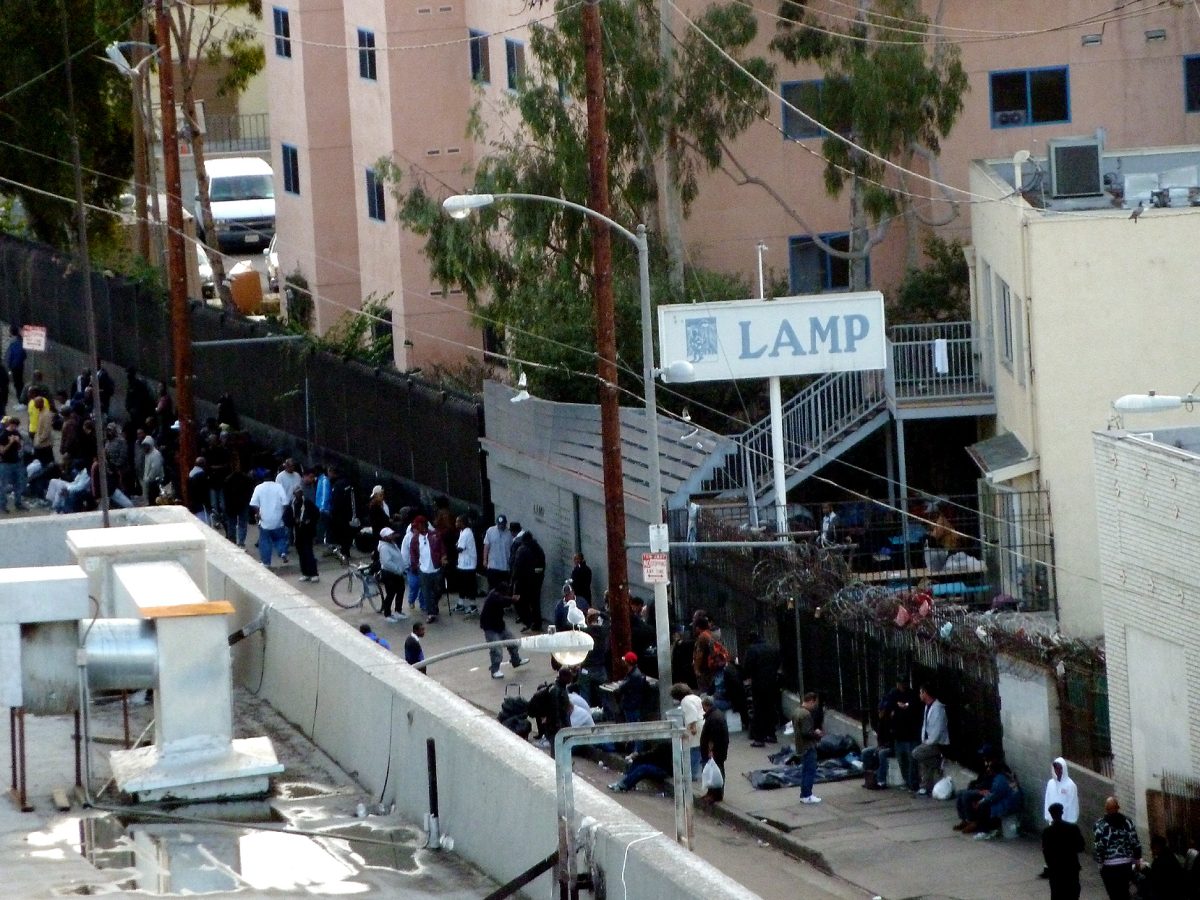
Homeless line the alley behind one of six Lamp Community drop-in centers in Skid Row, where homeless men and women with severe mental illness are taught self-sufficiency. The photo was taken from the roof of Union Rescue Mission, which provides 1,000 beds for the homeless each night.
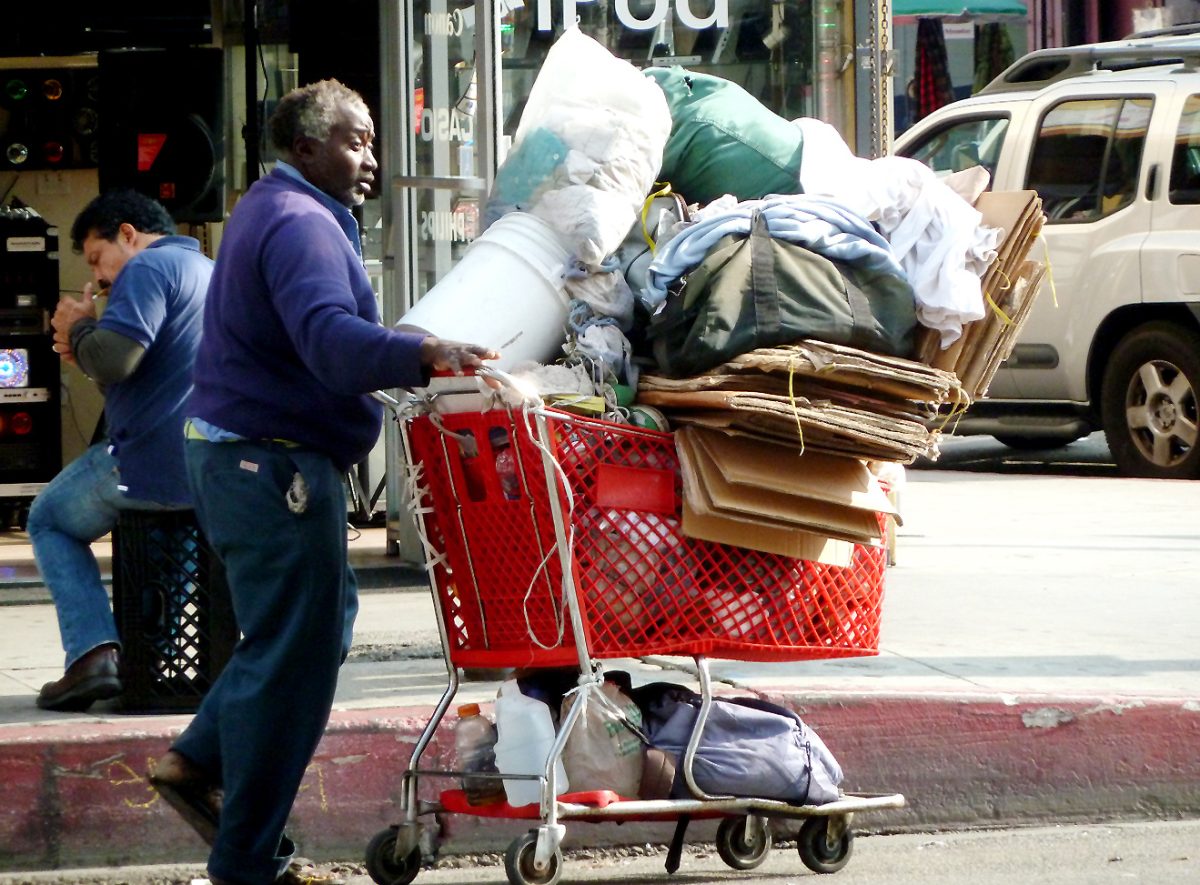
A homeless man pushes a cart with all of his possessions through the streets of Skid Row.
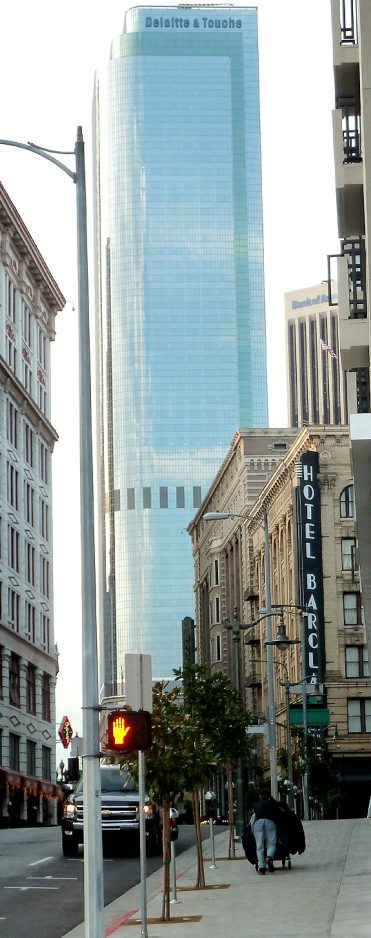
A lone homeless man pushes his shopping cart up a deserted Fourth Street in downtown Los Angeles on a Saturday afternoon.
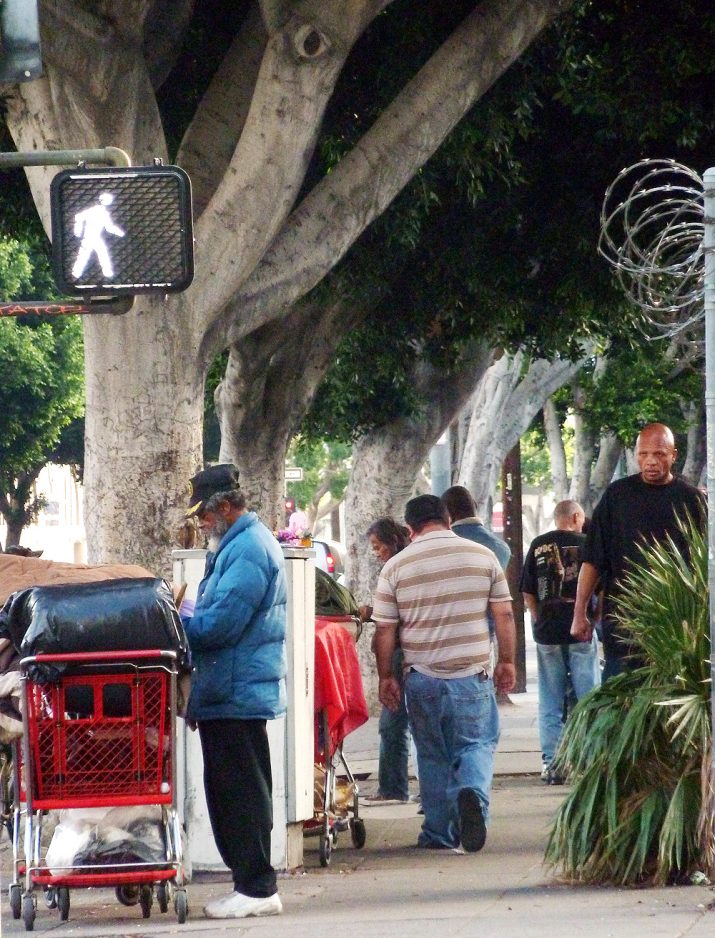
The homeless begin to mark their spots as they prepare to hunker down for the evening on the sidewalk on San Pedro Street in the heart of Skid Row in Los Angeles.
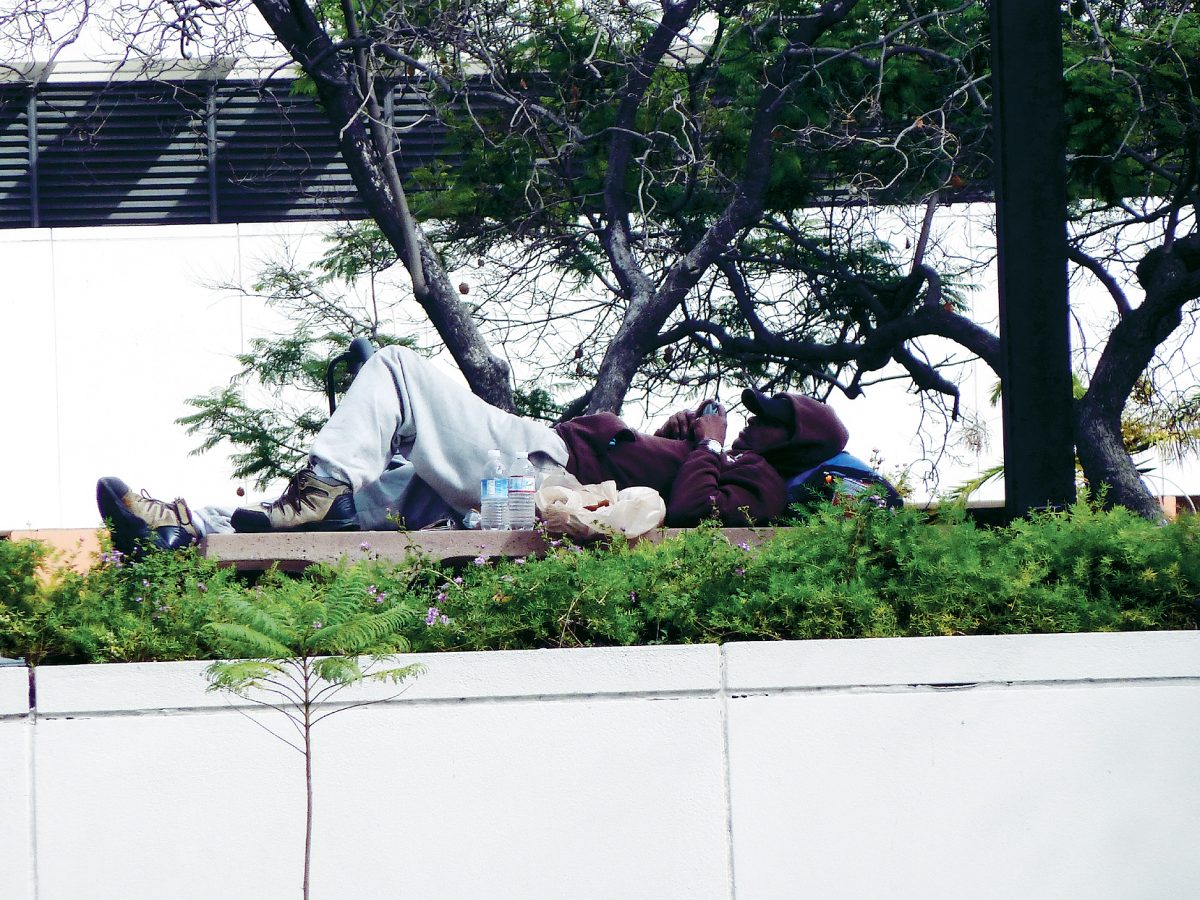
One of several homeless men and women who took refuge on concrete benches that line a plaza across the street from Los Angeles City Hall
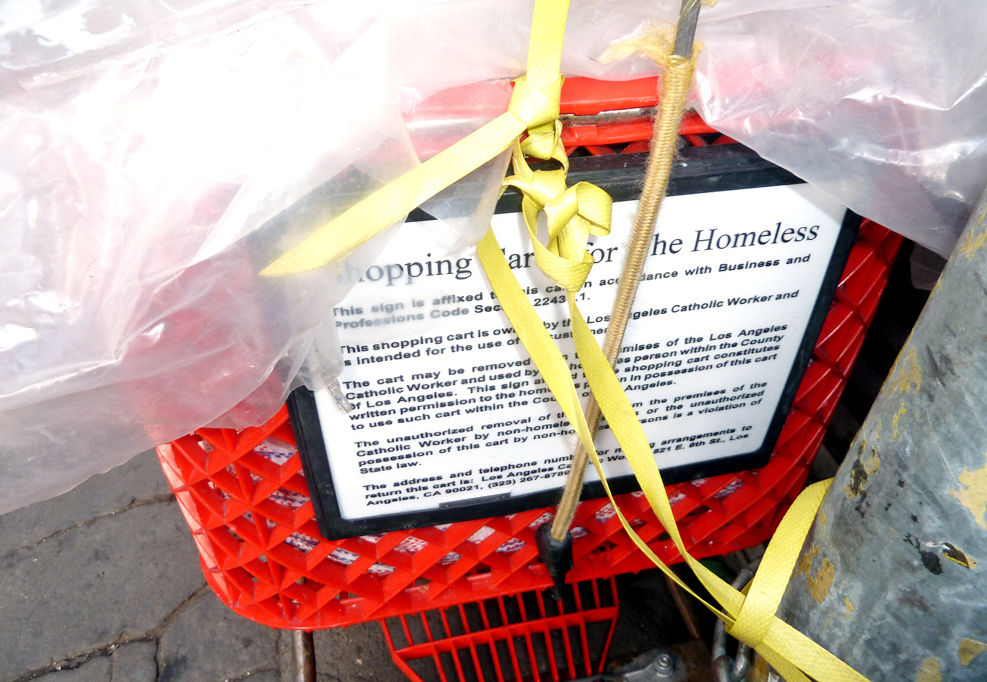
Shopping carts for the homeless are designated with signs throughout Skid Row in Los Angeles.
More than two years have passed since I walked the streets of Skid Row in Los Angeles, but the sight of thousands of homeless men, women and teens remains gut-wrenchingly vivid, the sounds chilling and the smells hauntingly pungent.
Men and women lie on beds made of cardboard in front of retail stores and restaurants, just blending into the scenery for many passersby who do nothing more than step over and around them. Some of the homeless cry out in pain, some mumble incessantly at no one in particular, and others scold anyone who glances at them.
Permanent portable toilets resembling old-fashioned ticket booths are strategically placed on street corners, but your nose tells you there aren’t nearly enough to accommodate the thousands of homeless who roam the streets, both day and night, as you catch a strong whiff of urine and feces long before you notice the human waste on the sidewalk.
Dumpster-diving is prevalent, regardless of whether the trash is in an alley or on a main street, and I watched men groom themselves in broad daylight while sitting on sidewalks.
Skid Row is a 54-block area in downtown Los Angeles that earned its name in the late 1800s. It was the last stop on the train on the West Coast, and hobos, aimless rail riders and transient workers congregated there.
Today, Skid Row contains one of the largest, stable populations of homeless people in the United States, with many landing there for the same reason they do in much less densely populated cities, like Washington: mental illness, domestic violence, substance abuse, lack of affordable housing and physical disability.
As Ken, a 58-year-old diabetic with high blood pressure who has lived on the streets in the city of Washington off and on for 20 years, said, others should not be so judgmental of the homeless. “People don’t know what issues have led you to your situation. Only you do,” he said.
A Greater Los Angeles Homeless Count conducted Jan. 25-27, 2011, by the Los Angeles Homeless Services Authority showed there were 4,316 homeless people living in Skid Row. Total population of the area is 13,889. The city of Los Angeles has 23,539 homeless people.
Skid Row, also known as Central City East, is within mere blocks of Los Angeles City Hall, the Los Angeles Times newspaper offices, the recently closed Parker Center, which was the previous headquarters of the Los Angeles Police Department, the LA County Courthouse and the hotel where I stayed while attending an International Street Medicine Symposium with Donna Bussey of the City Mission as charter volunteers with WeCare Street Outreach in Washington.
“Los Angeles is the homeless capital, mostly because of the weather we offer year-round,” Los Angeles County Supervisor Zev Yaroslavsky said. “To get our arms around the challenge has been daunting, financially and logistically.”
That doesn’t mean they haven’t tried.
The city has invested millions of dollars into homeless prevention initiatives when the economy was good, Yaroslasky said. Nonprofit-owned residential hotels have moved into the area, and many service facilities have been renovated and/or relocated to the area. Several shelters provide 24-hour services, rehabilitation programs and a safe place for people during the day.
Union Rescue Mission, for example, which opened in 1891, is located in an imposing five-story, 225,000-square-foot building on San Pedro Street in the heart of Skid Row. Daniel Freeman of the mission, a native of Aliquippa, said the mission can sleep 1,000 people, and more than 4,000 meals are served each day.
The Lamp Community opened in 1985 as a drop-in center in downtown Los Angeles, with the goal of improving the health and building self-sufficiency among men and women living with a severe mental illness. The Lamp Community now operates eight sites, including six in Skid Row, and provides immediate “no-strings-attached” housing and on-site support services. The no-strings policy means the homeless do not have to abstain from drugs or alcohol, and no one loses their home due to relapse or illness.
The premise, according to Lamp, is simple: People are more likely to succeed in treatment – and in all areas of their lives – when they have a stable home. In Lamp’s case, 85 percent of individuals it houses remain housed long-term.
That thinking was the impetus for Project 50, whose goal was to permanently house 50 of Skid Row’s most chronic, longtime homeless.
“The hope was once we got them in, we would start to address them on their terms,” Yaroslavsky said. “Fifty sounds like a trivial number, but the same template can be used for 500 or 5,000.”
He said 100 percent of the homeless who were offered housing accepted, and after three years, 87 percent remained in the program. The only reason the percentage was not higher is one person died, and another person returned to his native Mexico. A reduction in inpatient care and jail time also were benefits of the program.
“The cost to us … is not as expensive as incarceration or hospitalization. But from our point of view, cost is not driving us,” Yaroslavsky said. “It’s the humanitarian thing to do, whether you save money or not. Homelessness is a millstone around our humanitarian necks. … We must confront the issue head-on.”
Michael Arnold, executive director of the Los Angeles Homeless Services Authority, agreed.
“Our systems need to do a better job,” he said. “We’re like those who follow the elephants in a parade: We don’t make the mess, but we’re in charge of cleaning it up. We must think systemically. We need to do a lot more for those who need to get back on their feet.”
Medical and dental clinics dot the Skid Row landscape, and some even advertise openings. The Los Angeles Christian Health Center had a sign on its window touting the availability of five dental slots and three standbys.
Los Angeles also has changed some of its laws to be more accommodating to the homeless and those who help them.
An anti-camping ordinance was suspended in 2006 because the number of shelter beds was inadequate. Homeless individuals are permitted to sleep on the sidewalk between 9 p.m. and 6 a.m., making moot the many signs erected years ago by property owners that anyone who lies or sleeps on the sidewalk or public walkway is subject to prosecution.
California Health and Safety Code also permits authorized needle exchange programs and exempts program workers from paraphernalia charges to injection drug users. Over-the-counter sale of up to 10 syringes from a pharmacy or physician without a prescription is permitted, and needles will not be classified as drug paraphernalia if they are stored in a container that meets state and federal standards for disposal of sharp waste. The needle exchange on East Fourth Street in Skid Row also offers Narcan, an overdose prevention and response training. On the day we visited, 200 people were trained.
And in January, California approved a $10 billion program called California’s Bridge to Reform that increases health-care subsidies for the indigent, including the state’s estimated 134,000 homeless.
Los Angeles Catholic Worker even provides shopping carts for the homeless. The carts are designated by signs attached to each that read, in part, “This sign … constitutes written permission to the homeless person in possession of this cart to use such cart within the County of Los Angeles. … The unauthorized possession of this cart by non-homeless persons is a violation of the law.”
But not everyone’s door is open to the homeless in Skid Row.
Many restaurants require tokens or coins to gain access to their restrooms, and public restrooms in hotels are off-limits, too. Room keys are required for entry.
At night, visitors don’t dare venture near Skid Row by foot. They are urged by colleagues, hotel staff, city workers and emergency personnel to avoid the area – or take a taxi, if you can find a driver who’s willing – as the number of homeless swells substantially. Homeless men and women, primarily African-American males, and amputees in wheelchairs, are shoulder-to-shoulder, packing not only the sidewalks but spilling onto the streets as well. They pitch tents and are covered with tarps and blankets as the smell of cigarette smoke and urine hangs heavily in the air.
One block away, however, it’s a far different story. While seated at Pitfire Artisan Pizza on West Second Street, I watched young adults decked out in their Friday-night finest pour out of stretch limousines and pose for photographs against an elegantly lit backdrop before entering an upscale nightclub.
“Unless you, me and elected leaders are willing to accept this squalor, we must do something about it,” Yaroslavsky said. “We have have not made eye contact with this problem.”
The International Street Medicine Symposium I attended was founded by Operation Safety Net program director Linda Sheets and Dr. Jim Withers of Pittsburgh in 2005 so street medicine practitioners could meet and share best practices. Withers started practicing street medicine in 1992.
“It’s like pulling a thread,” Withers said. “Once we develop a relationship, we begin weaving ourselves in the streets’ fabric. We become witnesses to suffering and build on the principles that everybody matters.”