

Downey House Fire sparked change
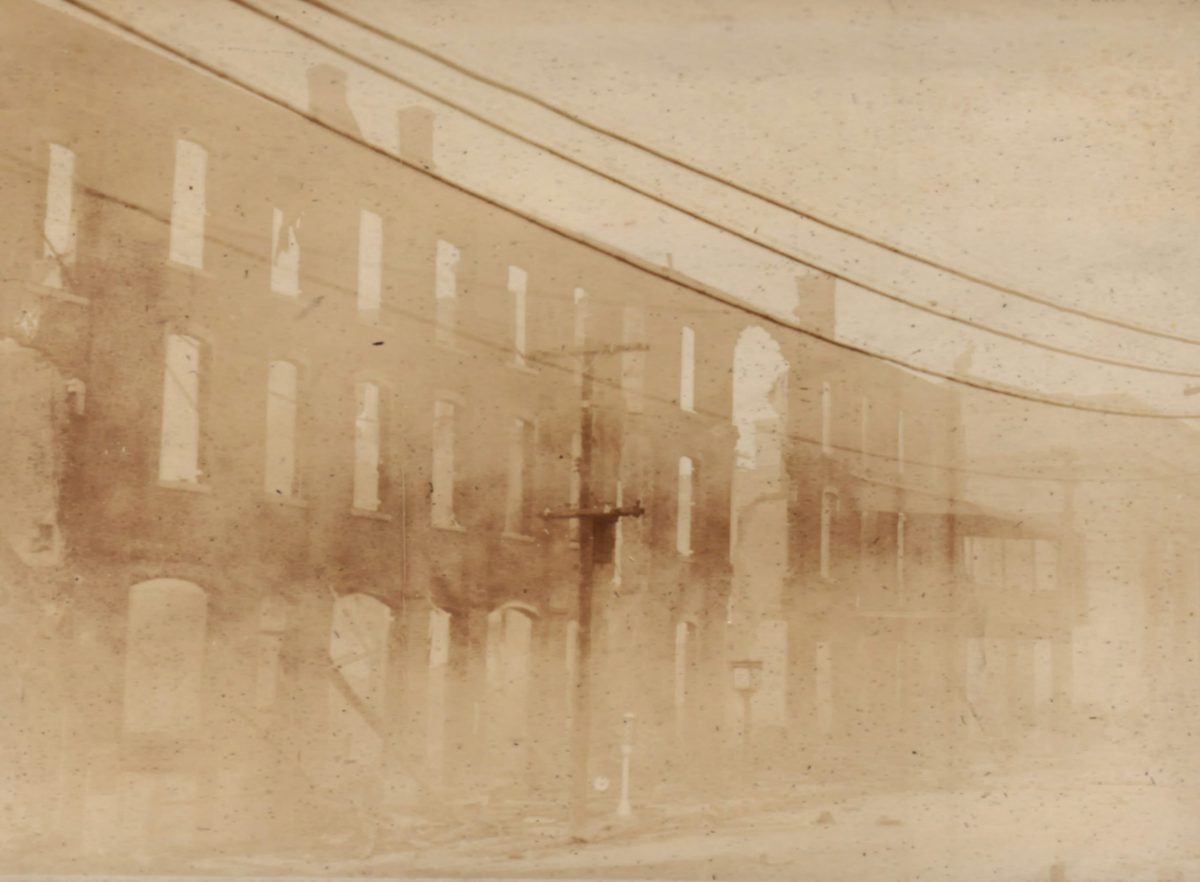
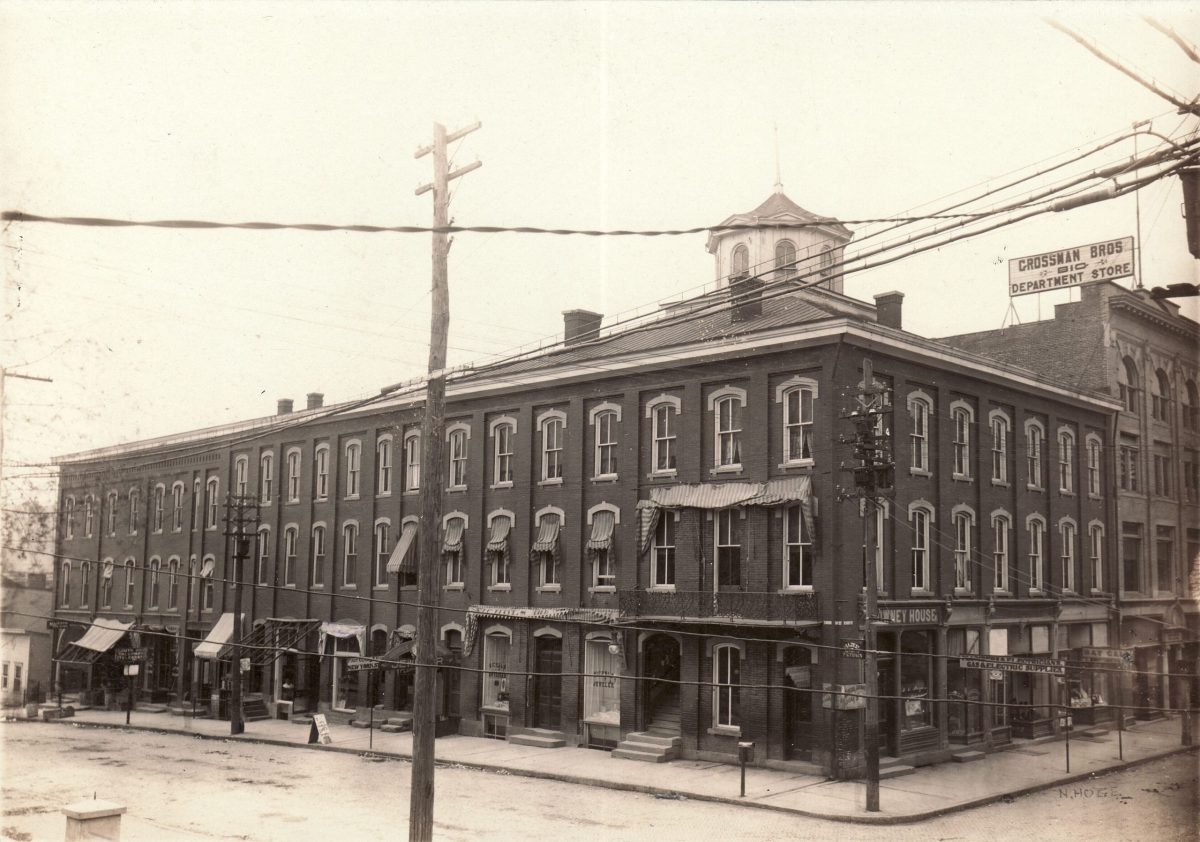
Almost 100 years ago, a fatal fire reshaped the Waynesburg downtown and led directly to the formation of the fire department that still serves the area today.
What became known as the Downey House Fire started around 3:30 a.m. Dec. 23, 1925, in the Coney Island Restaurant, located on the ground floor of the 56-year-old Waynesburg hotel.
The fire quickly spread throughout the building. About 50 guests at the hotel were roused from their sleep and safely evacuated, according to a Pittsburgh Post-Gazette article after the fire. Within half an hour, the building had been consumed, including the dozen other businesses located there.
Inside the Downey House’s Army-Navy store, ammunition exploded, sending bullets flying past firefighters and the crowd watching the fire, the Post-Gazette said.
Wind-borne embers ignited a fire that destroyed the Grossman brothers’ department store adjacent to the Downey House on High Street, which according to a Waynesburg Republican article.
Embers also sparked the Greene County Courthouse across the street, where it burned the cupola and wooden statue of Nathaniel Greene that sat atop the building. And they carried far enough to ignite a blaze east of the courthouse on Church Street that destroyed the First Presbyterian Church.
Four volunteers — Harvey Call, William Finch, Joseph Rifenberg and Thurman Long — were killed that night when they were trapped under a collapsing wall of the Grossman building. Another worker who volunteered, Victor Silveus, died from his injuries four days later. The youngest of them was 20; the oldest only 29.
Four others were seriously injured, including Clovis Wright, who would go on to become a longtime fire chief for the department that came next.
“That tragedy happened, and then they realized there’s a need for a formalized fire department,” said Jeff Marshall, chief of the Waynesburg-Franklin Township Volunteer Fire Co.
At the time, there had been a small firefighting organization under the control of the police chief. In practice, Republican writer John O’Hara recalled nearly 40 years later, the direction of firefighting was often a matter of “who had the best lung power.”
Its one hose truck, kept behind the jail about 100 feet from the fire, was still delayed by five crucial minutes when firefighters had trouble cranking it up to start, the Waynesburg Republican noted.
Firefighters from throughout the area pitched in to help. Ten other local departments responded, some coming from Washington and Fayette counties.
“I can’t imagine Charleroi, those departments, coming there from that distance, and back in the day when you couldn’t drive down the road at 70 miles an hour,” Marshall said.
One of those departments was the newly formed Rices Landing Volunteer Fire Co., which had just gotten its new chemical truck.
So new, that as Assistant Chief Bill Flenniken noted at the department’s 100th anniversary dinner, on the way to the fire, “they had to stop and pick up a hose to put on it.”
In addition to the dead and injured, newspapers tallied the total damage at close to $1 million (roughly $18.5 million today).
The next week’s Waynesburg’s Republican noted more collateral damage. The demolition of a wall of the Grossman building sent debris crashing through the roof of the three-story Silveus building, which would later be torn down.
The Republican led the call for change in a front-page editorial that week.
Waynesburg needed a dedicated volunteer department. And better equipment.
“Waynesburg has had its lesson,” the editorial said. “Has (it) learned? Or will it quietly subside and continue in the ways of the past, its effete but serene existence, with a few hundred feet of hose and an old model hose truck which cannot be started when needed, until perhaps a greater disaster comes upon us.”
Local leaders met the following March in Waynesburg to form a new fire company.
Clyde McCall, a local grocer and the father of Harvey Call, made the motion to create a temporary group of officers, according to a 20th anniversary piece of the department by the Waynesburg Republican. The second came from H.C. Schreiber, whose jewelry business had been located in the Downey House fire.
The fire truck they bought, a 1925 American LaFrance, is still with the department, and well-maintained enough to run during special events, most recently carrying Santa in Waynesburg’s Christmas parade.
The department’s service is part of the fire’s legacy, Marshall said.
“If there weren’t the volunteer fire departments, I don’t know how the municipalities could financially do it,” he said. “We’re their best option to keep us viable, because the money we get wouldn’t come close to having a paid staff.”
New buildings rose to take the place of the ones lost to the fire.
On the site of the Downey House now stands the Fort Jackson building, which houses some of Greene County’s government offices. Completed in 1927, it has a plaque honoring the five firefighters who died trying to save its predecessor.