

Study shows probable link between Freeport Twp. contamination and fracking
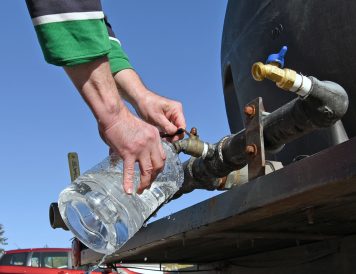
Chemicals found in wells near the site of a 2022 incident in Freeport Township indicate a link to nearby fracking activity, according to a recent report by researchers from the University of Pittsburgh and Duquesne University.
A lawsuit filed by residents of Freeport and Springhill townships in Greene County alleges EQT caused the contamination through fracking fluids breaking rocks and traveling between an unused well and two wells the company was fracking at its Lumber pad.
The contamination also extended significantly beyond the 2,500-foot zone around the rupturing well, the report contended.
John Stolz, a Duquesne University professor of civil and environmental engineering and science, and Dr. Dan Bain, an associated professor of geology and environmental science at the University of Pittsburgh, looked at 75 wells in the area over a 21-month period. Of those, 66 were private water wells, said Stolz.
All of the wells were in the area where a mixture of fluid and gas was seen spurting from the ground on June 19, 2022. The event is called a frac-out.
The samples taken in the affected area were more likely to test highly for substances found in fracking, such as bromide and lithium, Stolz said.
The fallout, officials in Freeport and Springhill township contend, has been continued lack of access to suitable drinking water. Earlier this year, officials in both townships declared disaster emergencies in an effort to get state and federal funds to address that.
While it can be challenging to completely separate out the mix of possible fracking contamination from legacy contamination, the researchers wrote, the results show a “compelling set of evidence that the frac-out resulted in novel chemistry in the groundwaters in New Freeport.”
EQT did not respond to requests for comment.
The researchers started with tests in the 2,500-foot zone around the frac-out. They then moved outward, with 30 of the 75 samples taken beyond that zone.
Stolz said he hopes the report would lead the natural gas industry to acknowledge that fracking can cause contamination in groundwater and people’s wells.
“They refuse to accept that,” he said.
And given the state’s history of extractive industry, there’s more potential for pathways below the ground to have far-reaching effects like New Freeport’s, he said. Stolz said the state’s current regulations on water and contamination from fracking and drilling are insufficient. Currently, the zone of presumption is 1,000 feet for conventional vertical drilling and 2,500 feet for horizontal drilling or fracking.
“It’s clear that that is insufficient, given that something like what happened in New Freeport can happen, and that the zone of presumption should at least be 5,000 feet,” he said. “And even then, that might even not help the folks in New Freeport.”
Attorneys representing plaintiffs in the lawsuit recently asked a federal judge to grant a temporary injunction requiring EQT to continue supplying residents with weekly water delivery and water buffaloes. Residents contended supplying their own clean water was a financial burden.
While not discounting the economic burdens that would be put on the residents if EQT stopped supplying water to them, a federal judge denied the request, finding that “could be addressed through monetary damages.”
David Hice, one of the plaintiffs in the suit, has continued to receive water buffaloes from EQT, which he uses to provide water for showering and cleaning. He had suffered a range of lesions and blisters after trying to use well water in the weeks after the contamination.
Without an injunction, he said, he worried about a potential cutoff of the supply.
The company that fills the water buffaloes quoted Hice a price of about $3,000 to rent the tank and to have it filled monthly.
“I can’t afford that,” he said. “I don’t even get $3,000 a month. I live on fixed income, Social Security. That leaves me completely without water if EQT quits paying for it.”
Hice purchases his own water for drinking and cooking, refilling a 5-gallon tank every week and picking up a case of drinking water every other week.
“This has been three years we keep putting up with this here, and it seems like they keep dragging it out,” he said. “I mean, let it go to court, let a jury decide.”