

‘It’s a challenge’
Consumers, businesses feel pinch of grocery inflation
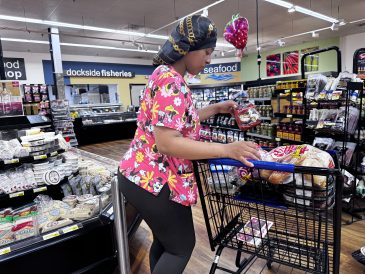
Pennsylvanians already feeling the sting of higher prices at the gas pump are facing another major hit to their pocketbooks: at the grocery store.
In May, the U.S. Department of Agriculture sharply raised its outlook for 2026 food inflation, warning that grocery prices and overall food costs are now expected to rise faster than their long-term averages due to several factors, including severe weather across the country, international conflict, tariffs, and ongoing supply chain issues.
The USDA now forecasts overall food prices to increase 3.4% in 2026, up from a 2.9% estimate in April.
Grocery, or food-at-home, prices are projected to rise 3.2%, compared to the prior 2.4% forecast.
Restaurant, or food-away-from-home, prices are expected to increase 3.5%, slightly below the previous estimate of 3.6%.
The updated projections place both overall food inflation and grocery inflation above their respective 20-year averages of 3% and 2.6%.
“I’m very concerned. When I go to the grocery store now, I don’t buy name brands. I buy knock-off brands,” said Tay Perez of Washington during a recent trip to Shop ‘N Save in Washington.
The USDA said the latest grocery inflation outlook is the highest since the agency began issuing 2026 forecasts in July 2025.
“It’s a difficult environment right now. Diesel is up, electricity costs are up on our end, gas is up, water is up, insurance is up,” said Jeff Duritza, Shop ‘N Save owner. “It’s a challenge.”
A major driver of cost is beef prices, which the USDA now expects to climb 12.1% this year.
Fresh tomatoes have experienced even steeper increases, surging nearly 40% compared to the same period last year. And coffee enthusiasts are facing an 18.5% annual price increase, with costs rising 2% from April alone.
The beef industry is grappling with the smallest cattle herd in 75 years due to prolonged droughts that have degraded pastureland and made it expensive for ranchers to feed their herds, and the return of the screwworm.
Retail beef prices averaged a record $9.64 per pound in April, up 13% from the previous year, according to USDA data.
“I don’t see anything changing regarding beef costs,” said Duritza.
Among the 15 major grocery categories tracked by USDA, nine are now forecast to rise faster than their historical averages, including beef and veal, fish and seafood, fresh fruits and vegetables, processed produce, sugar and sweets, and nonalcoholic beverages.
The spikes in tomato costs have been driven by a combination of recent U.S. tariffs and unseasonably wet weather and disease resulted in below-normal yields in Mexico, and freezes in Florida early in the year that affected the tomato crop.
Coffee prices have soared due to factors including drought and other severe weather in major coffee-growing countries like Brazil and Vietnam, and trade tariffs.
The coffee supply chain’s complexity has created day-to-day uncertainty for small businesses like Chicco Baccello, which operates coffee shops in Washington and Canonsburg.
Co-owner Nancy Ogburn said the coffee shop is weathering the challenges and aims to keep prices steady.
“We’re just absorbing the cost. We’re hoping prices will go back down,” said Ogburn. “We’re going to ride it out and see what happens because we don’t want to raise prices.”
Prices for pork, poultry, and bakery goods are expected to rise, although more modestly. Eggs, dairy products, and fats and oils are forecast to decline from 2025 levels.
Egg prices are projected to post the largest annual decline in USDA records dating back to 1974, falling 29.8% after surging 21.4% in 2025 amid widespread avian flu outbreaks. The USDA said fewer avian flu detections this year, along with improved replacement flock availability, have resulted in a rapid recovery of egg production.
Grocery prices account for roughly 61% of total food spending, the USDA reported, compared to about 39% for restaurant spending, which underscores the economic impact of sustained increases at supermarkets.
Meanwhile, USDA warned that higher fuel costs could further intensify food inflation pressures if energy prices remain elevated, as transportation and distribution expenses continue filtering through the food supply chain.