

Heatwave could contribute to algae and bacteria in local waterways
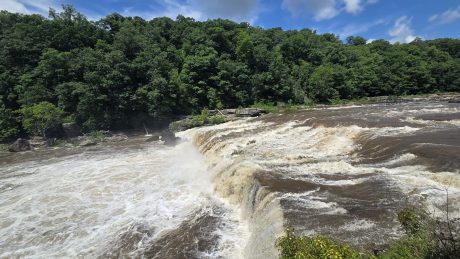
The near-record heatwave singeing the greater Pittsburgh region could negatively impact aquatic wildlife and human users by enabling the growth of waterborne bacteria and algae, according to experts.
According to Department of Conservation and Natural Resources (DCNR) Natural Resources Program Supervisor Nick Decker, intense heat is one factor in a complex system that fuels algal blooms and bacteria growth.
Decker said that high heat, strong wind and rainfall can all create conditions favorable for rapid growth of algae and bacteria in local waterways.
According to the U.S. Centers for Disease Control and Prevention (CDC), algae is a normal component of many aquatic ecosystems, but can become detrimental if its growth is accelerated.
Rapid algae growth can deplete the available oxygen in the water, resulting in a hypoxic environment that can harm fish and other species, according to the CDC.
This dense algae can also clog fishes’ gills and block sunlight from reaching plants that grow along the bottom of the lake, river or stream.
Decker said some of the 35 Pennsylvania State Parks with public swimming areas experience algal blooms and bacteria growth each year.
The DCNR regularly tests water quality at these locations, with specific tests for harmful bacteria such as e. coli, Decker said.
If a test reveals bacteria levels beyond a specified limit, DCNR staff will close the swimming area until subsequent tests indicate the water quality has returned to normal, he said.
Ohiopyle State Park Manager Chris Houck said the Youghiogheny River that bisects the park is usually resistant to algal blooms, since the water flows too quickly to allow algae to accumulate.
“It’s much less risky,” he said.
The nonprofit Mountain Watershed Association performs regular testing on waterways across Southwestern Pennsylvania that are not covered by DCNR testing practices, with updated results published weekly on their website.
According to Watershed Specialist Chantelle Hutchens, the association assigns each testing location a binary pass/fail designation based on the number of bacteria colonies detected in a specific water sample.
A reading of 235 bacteria or more in a given sample indicates an increased risk of infection.
Hutchens said that people who are immunocompromised or have other conditions that increase susceptibility to infection should strongly consider avoiding swimming at a location that has received a “fail” assessment during the most recent testing cycle.
Failed tests are common occurrences at several locations, Hutchens said, with the likelihood increasing after a heavy rainstorm or sustained heatwave.
Rainfall can lead to runoff from municipal sewage systems or private septic tanks into neighboring watersheds, which can lead to a surge of bacteria growth.
Hutchens said the public should consult the latest testing results online at https://mtwatershed.com/swimmable-waters/ before deciding whether to get in the water at a particular location.
Decker said that beyond swimming, Pennsylvania’s state parks are a valuable resource during heatwaves, as visitors can escape the heat by seeking shelter under a shady tree or rock outcropping.
Washington County Parks and Recreation Director Jeffrey Donahue said regular water testing is not conducted at the three county parks – Mingo Creek, Cross Creek and Ten Mile Creek – since public swimming is not permitted.
According to Donohue, there is nothing Parks and Recreation staff can do if an algal bloom occurs at a county park.
Decker said state park visitors can stay safe by observing all posted signage regarding water quality and following safe-swimming guidelines such as showering before and after entering the water and avoiding swimming if sick.